

Buying Multifamily Property in Phoenix: What To Know
Buying a small apartment building or a larger multifamily asset in Phoenix can be a smart move, but it is not a simple one. The market has real opportunity, and it also has plenty of moving parts, from neighborhood-level rent demand to operating costs and financing terms.
If you are exploring buying multifamily property in Phoenix, the biggest advantage is local knowledge. You want to understand not just price per unit, but also tenant profile, submarket growth, future expenses, and how the asset fits your strategy. That is true whether you are a first-time investor or a seasoned buyer looking to scale.
Why Phoenix Still Attracts Multifamily Buyers
Phoenix continues to draw attention because of population growth, job expansion, and ongoing demand for rental housing. That combination creates long-term interest from private buyers, family offices, and institutional capital.
For you, that means competition can be real in well-located areas, but it also means there is depth in the market. Some buyers want value-add opportunities. Others want stabilized properties with lower execution risk. Either way, the Phoenix market gives you multiple entry points.
What buyers should watch first
- Rent trends in the immediate submarket
- Vacancy and turnover history
- Property age and deferred maintenance
- Utility structure and expense load
- Zoning, parking, and layout efficiency
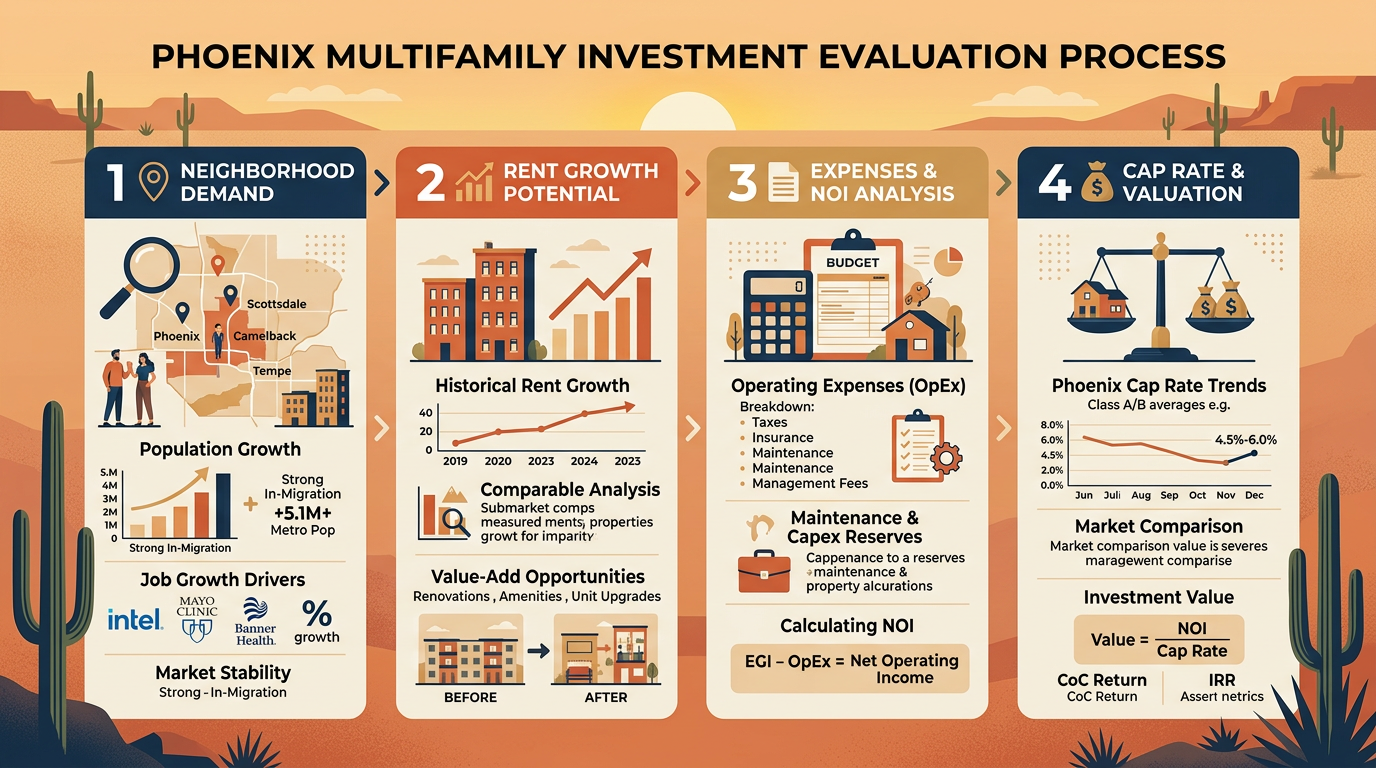
The Key Numbers That Matter Most
A lot of new investors focus only on asking price. That is a mistake. In multifamily, the real story lives in the numbers behind the property.
You will want to review in-place rents, pro forma assumptions, operating expenses, management efficiency, and financing options. The best deals are not always the cheapest ones, they are the ones with the clearest path to stronger income and better operations.
Metrics worth reviewing carefully
- Gross rent multiplier
- Net operating income
- Cap rate based on real expenses
- Rent growth potential by unit mix
- Estimated capex over the next 3 to 5 years
If you are comparing options, it helps to pair those numbers with market research and current investment sales guidance so you can see what is actually trading, not just what is being advertised.
Neighborhood Fit Matters More Than Zip Code Headlines
Phoenix is not one flat market. A property in one pocket can perform very differently from a similar building a few miles away. That is why serious buyers look beyond broad city headlines and focus on neighborhood demand.
Think about access to employment centers, freeway connectivity, school quality, retail convenience, and tenant lifestyle preferences. These factors influence occupancy, rent stability, and resale value.
Questions to ask before you buy
- Who is the likely tenant base?
- Is the area improving, stable, or under pressure?
- What are nearby comparable rents?
- Is the property attractive to future buyers?
For buyers who want a deeper market lens, Who We Are and Recent Posts can help you get familiar with the kind of local insight that matters before making an offer.
Financing and Underwriting Can Make or Break the Deal
Even a strong-looking property can become a weak investment if the debt is structured poorly. Interest rates, lender reserves, and loan terms all affect your real return.
This is especially important if you are buying with a value-add plan. If the business plan assumes future rent increases or renovations, your underwriting needs to be conservative enough to handle delays or surprises.
Smart underwriting habits
- Stress test interest rates and occupancy
- Confirm renovation costs with real bids
- Build in reserves for repairs and leasing
- Avoid overestimating rent increases
If you are planning a purchase, it can also help to review Cash Offer options or compare them with conventional acquisition strategies depending on your timing and risk tolerance.
Where Investors Often Gain the Most Advantage
The best opportunities often come from properties that are well-located but under-managed. That could mean below-market rents, outdated interiors, weak marketing, or poor expense control.
In Phoenix, investors who understand local demand can often create value through modest improvements, better tenant positioning, and cleaner operations. The key is making sure the improvement plan is realistic and tied to a clear exit strategy.
Common value-add levers
- Interior upgrades with strong rent response
- Utility and expense reallocation
- Professional management improvements
- Better leasing presentation and marketing
If your goals include broader acquisition strategy, Leasing and Tenant Representation resources can be useful, especially if your buying decision is tied to future occupancy or repositioning.
Common Mistakes To Avoid
Many buyers lose money by rushing the process. They focus on the headline return and ignore hidden issues.
Some of the most common mistakes include overpaying for projected income, underestimating repairs, skipping rent verification, and ignoring exit liquidity. You can avoid a lot of trouble by slowing down and asking the right questions early.
Red flags to investigate
- Incomplete financial records
- High turnover with no clear reason
- Deferred maintenance that looks minor but is not
- Unrealistic pro forma assumptions
FAQ
Is Phoenix a good market for multifamily investment?
Yes, Phoenix continues to attract buyers because of long-term housing demand and a broad tenant base. The best results usually come from careful underwriting and strong local execution.
What size multifamily property is best for first-time investors?
Many first-time buyers start with duplexes, triplexes, or fourplexes because they are easier to finance and manage than larger buildings. The right size depends on your budget, experience, and long-term goals.
How important is neighborhood selection?
Very important. Two similar properties can perform differently based on location, tenant profile, and nearby amenities. Neighborhood-level analysis often determines whether a property is a stable hold or a true value-add play.
What should I review before making an offer?
At minimum, review trailing financials, rent rolls, repair history, insurance costs, taxes, and financing assumptions. You should also understand how the property compares to nearby sales and current leasing trends.
Can out-of-state buyers invest successfully in Phoenix?
Yes, many do. The key is having local support, realistic underwriting, and a clear plan for management and oversight.
A Smarter Next Step For Buyers
If you are serious about buying multifamily property in Phoenix, focus on the basics first: location, income quality, expense control, and long-term flexibility. The buyers who win in this market are usually the ones who stay disciplined, not the ones who move fastest.
For a clearer path forward, start with the right property search, then layer in underwriting, financing, and local guidance. If you want to explore current opportunities, For Sale Listings and List My Property can help you understand both sides of the market.
Thinking about buying or selling real estate in Phoenix?
Call 602-281-6202 or
contact us here
to get local guidance and a clear next step.
About Natan Jacobs
NatanJacobs.com is a Phoenix-based real estate resource from Vestis Group, helping buyers, sellers, and investors
navigate residential, multifamily, and commercial real estate across Arizona. We provide hands-on guidance, market insight, and transaction execution with a focus on clear strategy and real results.
Explore Services & Resources
- For Sale Listings
- Investment Sales
- Leasing
- Tenant Representation
- Research
- Cash Offer
- List My Property
- Contact
Talk With Us
Call 602-281-6202
Email info@vestis-group.com
Contact: https://natanjacobs.com/contact/