
Phoenix Commercial Real Estate Leasing Guide for Tenants
Phoenix keeps attracting businesses for a reason. The market is active, the population base is growing, and companies that want space in the Valley often have to move quickly and make smart decisions. That is exactly why a phoenix commercial real estate leasing guide matters, whether you are opening your first location, relocating a regional team, or renegotiating a lease.
Here’s the thing, leasing in Phoenix is not just about finding four walls and a parking lot. It is about choosing the right submarket, understanding operating costs, and making sure the space supports your business now and later. For owners and tenants alike, the best leases are the ones that balance flexibility, cost control, and long-term strategy.
What Makes Phoenix Leasing Different
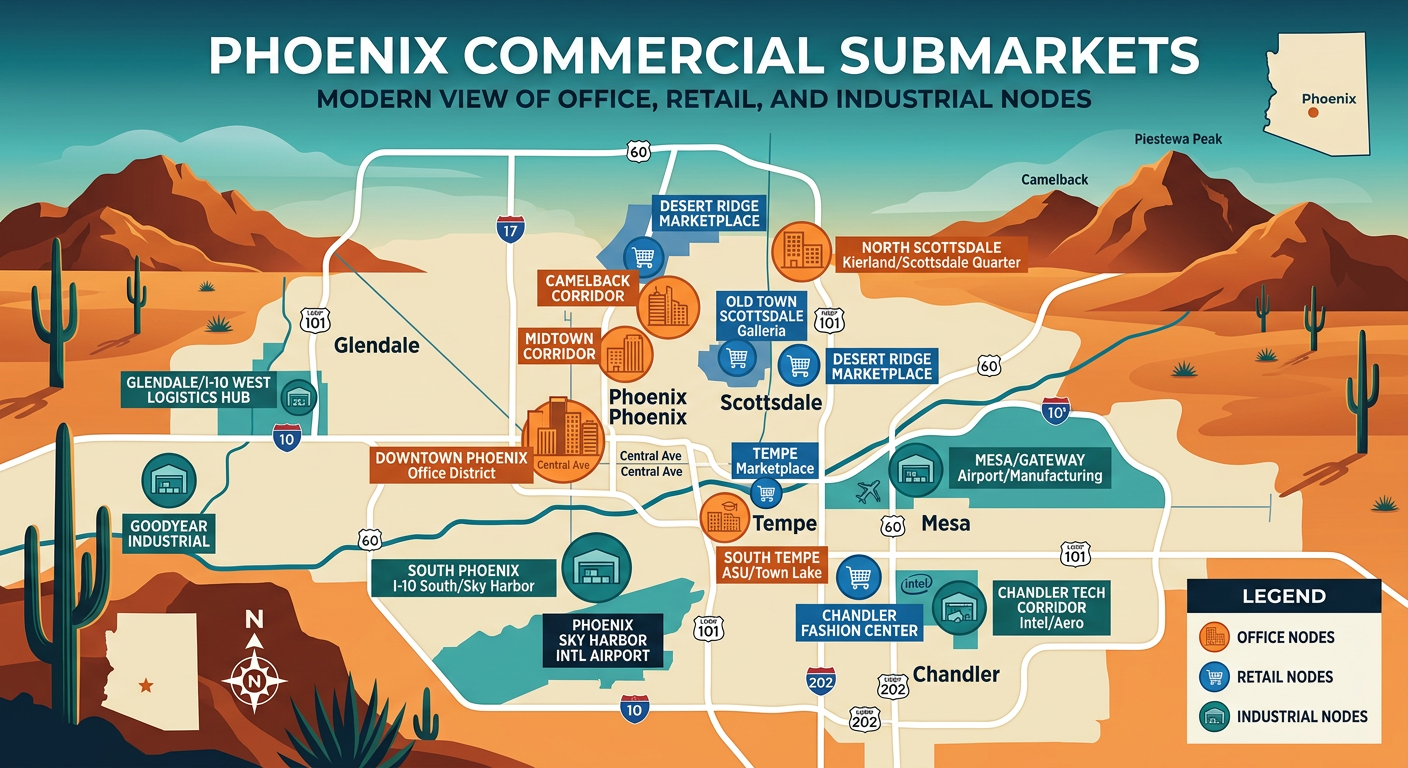
Phoenix is a large, spread-out metro with very different leasing dynamics from one corridor to the next. A space that makes sense in Central Phoenix may not fit the needs of a user in Scottsdale, Tempe, Chandler, or the West Valley.
A strong leasing strategy starts with local context. You need to think about:
- Drive-time access for employees and customers
- Visibility and signage opportunities
- Parking ratios
- Nearby competition and complementary businesses
- Whether the building is office, retail, industrial, medical, or mixed-use
If you want to compare market opportunities more broadly, it helps to review Recent Posts and the local market perspective on Research.
Start With the Right Space Type
The first big decision is the property type. Many tenants begin with a vague square-foot target, but that is only part of the picture.
Office space
Office users should evaluate layout efficiency, internet infrastructure, elevator access, and image. In Phoenix, office demand can vary sharply by neighborhood and by building class, so a deal that looks affordable on paper may become expensive once you add tenant improvements and ongoing operating costs.
Retail space
Retail tenants need traffic, visibility, and a clear understanding of co-tenancy. If your business depends on walk-ins, parking and surrounding tenants can matter as much as the rental rate.
Industrial and flex space
Industrial users often care most about loading, clear height, power, dock access, and maneuverability. Flex space can work well for service-based businesses that need a hybrid of office and warehouse.
Medical and specialized space
Medical tenants usually face a different build-out standard than a general office user. If you need exam rooms, plumbing, and compliance-ready infrastructure, your lease structure needs to account for those improvements up front.
Know the Lease Terms Before You Sign
Many tenants focus on rent first, but the lease terms can have a bigger financial impact than the base rate.
Watch these items closely:
- Lease type, such as gross, modified gross, or triple net
- Annual escalations
- Security deposit requirements
- Tenant improvement allowance
- Renewal options
- Early termination rights
- Exclusivity or use restrictions
- Repair and maintenance responsibilities
- CAM, tax, and insurance obligations
A lower asking rent can still be a bad deal if operating expenses are high or the landlord passes through too many costs. That is one reason tenant representation is so valuable. If you are evaluating options, explore Tenant Representation and compare it with Leasing services.
How to Negotiate Better in Phoenix
Negotiation is where many tenants create real value. In a competitive market, the landlord may not move much on headline rent, but there are often other points you can improve.
Focus on negotiating:
- Free rent during build-out or ramp-up
- Stronger tenant improvement dollars
- Better renewal language
- Caps on expense increases where possible
- More favorable default and assignment language
- Sufficient signage and use rights
If you are expanding, relocating, or consolidating, timing matters too. Starting early gives you more leverage, more options, and less pressure to accept the first available suite.
Location Strategy Still Wins
In Phoenix, location strategy is not just about prestige. It is about convenience, labor access, customer access, and future growth.
Ask yourself:
- Where do my customers actually come from?
- Where does my workforce live?
- Will this location still make sense in three to five years?
- Is the surrounding area growing or stagnating?
This is especially important for businesses serving households, homeowners, or local consumers. A well-placed space can strengthen your brand and improve day-to-day operations. For businesses considering expansion alongside broader market moves, Who We Are can help you understand the local approach behind the deal.
What Owners Should Expect From the Leasing Process
If you own commercial property, leasing success comes from more than just listing the vacancy. It takes positioning, pricing, and tenant screening.
Owners should be ready to evaluate:
- Current market rent versus achieved rent
- Target tenant profile
- Build-out expectations
- Length of vacancy tolerance
- Credit quality and business stability
- Marketable improvements that reduce downtime
If the property is an investment asset, leasing decisions affect value directly. Better lease terms, stronger tenant quality, and lower downtime can all improve long-term performance. For owners looking at disposition or repositioning, Investment Sales and List My Property are worth reviewing.
Common Leasing Mistakes to Avoid
A lot of tenants and owners make the same avoidable mistakes.
Signing too early
If you do not compare enough options, you may overpay or lock into a space that does not fit operationally.
Ignoring total occupancy cost
Rent is only one piece of the equation. You need to understand the full monthly cost, including pass-throughs and build-out obligations.
Underestimating build-out time
A deal can look great on paper and still fail if you cannot open on schedule.
Skipping professional guidance
Commercial leases are more complex than many business owners expect. A local broker can help you avoid hidden issues and improve deal terms.
How This Connects to Phoenix Buyers and Sellers
Even though this is a leasing guide, it matters to residential buyers, sellers, and investors too. Commercial leasing trends can influence neighborhood growth, retail demand, and investor confidence across the Valley.
If you are buying a home nearby, selling in a fast-growing area, or evaluating an investment property, leasing activity can be a useful signal. Strong tenant demand often supports broader demand for nearby housing and services.
Quick Takeaway
The best leasing decisions in Phoenix come from understanding your space needs, comparing total costs, and negotiating terms that support your business goals. A smart lease is not just affordable, it is operationally efficient and flexible enough to grow with you.
FAQ
How far in advance should I start looking for commercial space in Phoenix?
Start at least six to twelve months before your desired move date, especially if you need build-out work or have specific location requirements.
What is the biggest mistake tenants make when leasing space?
Focusing only on base rent. Total occupancy cost, lease flexibility, and build-out support usually matter more over time.
Is tenant representation worth it?
Yes, especially if you want help comparing options, negotiating terms, and avoiding hidden lease costs. It can save time and reduce expensive mistakes.
Which Phoenix submarket is best for my business?
That depends on your customer base, workforce, budget, and space type. Office, retail, medical, and industrial users all need different locations.
Can a landlord help with tenant improvements?
Often yes, but the amount and structure vary. Tenant improvement allowances are one of the most important terms to review carefully.
Do commercial leases vary a lot by property type?
Yes. Office, retail, industrial, and medical leases all have different priorities, cost structures, and build-out expectations.
Next Step For Phoenix Leasing
If you are comparing commercial space in Phoenix, the fastest way to protect your time and budget is to work from a clear strategy. Review your location needs, understand the lease terms, and make sure the space supports your actual business plan.
Thinking about buying or selling real estate in Phoenix?
Call 602-281-6202 or
contact us here
to get local guidance and a clear next step.
About Natan Jacobs
NatanJacobs.com is a Phoenix-based real estate resource from Vestis Group, helping buyers, sellers, and investors
navigate residential, multifamily, and commercial real estate across Arizona. We provide hands-on guidance, market insight, and transaction execution with a focus on clear strategy and real results.
Explore Services & Resources
- For Sale Listings
- Investment Sales
- Leasing
- Tenant Representation
- Research
- Cash Offer
- List My Property
- Contact
Talk With Us
Call 602-281-6202
Email info@vestis-group.com
Contact: https://natanjacobs.com/contact/