

Is It a Good Time to Buy a House in Phoenix? 2026 Market Guide
Buying in Phoenix feels more complicated than it did a few years ago. Prices are no longer racing upward like they did during the hottest pandemic-era market, but affordability is still tight, mortgage rates are meaningful, and the best homes can still attract strong interest.
If you’re asking, is it a good time to buy a house in Phoenix, the honest answer is: it can be, but only if the home, payment, neighborhood, and timing fit your plan. Phoenix is giving buyers more room to compare and negotiate, yet it’s not a market where every listing is automatically a bargain.
| Buyer Type | Opportunity Right Now | Main Risk | Best Move |
|---|---|---|---|
| First-time buyer | More listing choice | Payment pressure | Buy within comfort zone |
| Move-up buyer | Trade equity strategically | Selling and buying timing | Coordinate both sides early |
| Relocation buyer | More options than peak market | Neighborhood mismatch | Study ZIP codes closely |
| Investor | Better entry points | Thin cash flow | Underwrite conservatively |

Is It a Good Time to Buy a House in Phoenix Right Now?
For many buyers, yes, but not because Phoenix suddenly became cheap. It’s a better time for disciplined buyers because the market has become more selective, and selectivity creates negotiating space.
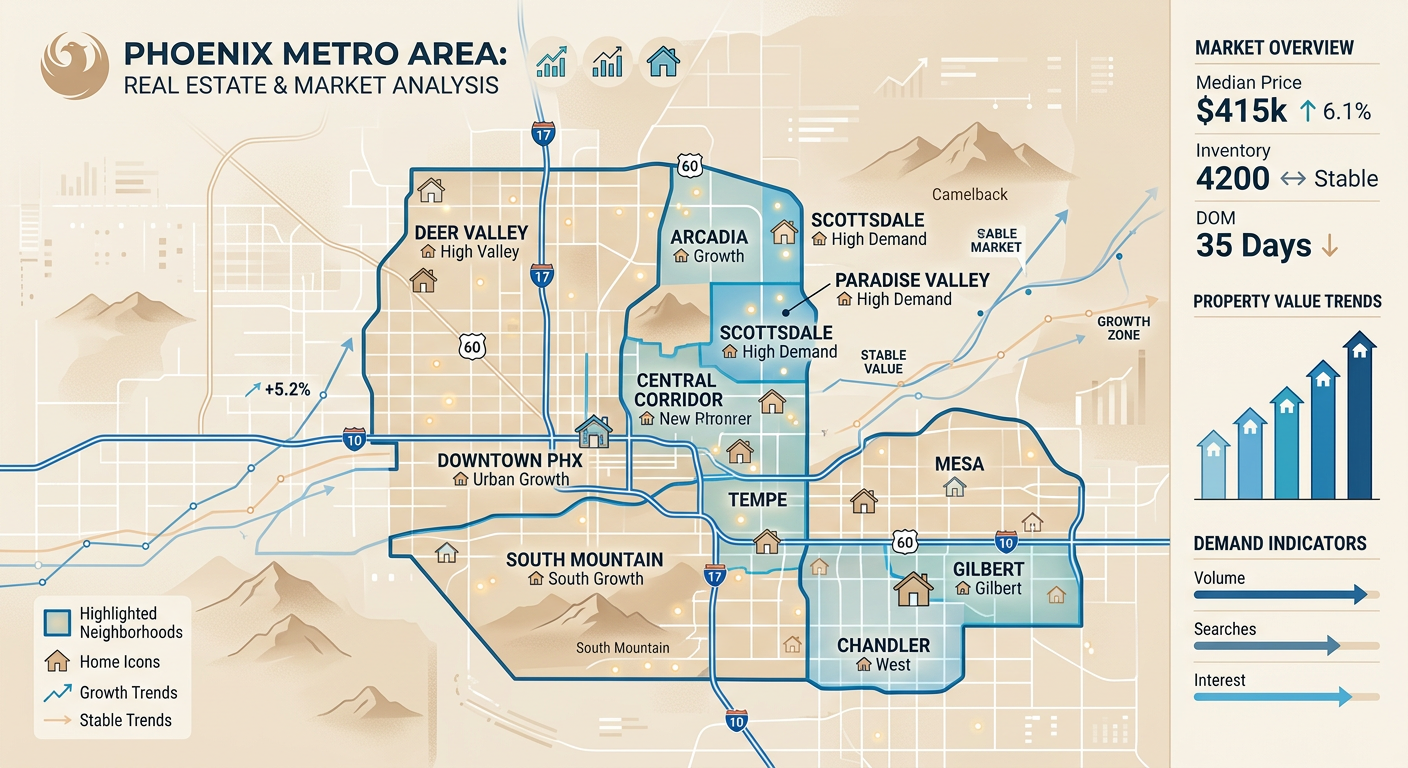
Recent market snapshots show why nuance matters. Redfin’s Phoenix housing market data reported a median sale price around $464,000 for the three months ending May 2026, up only slightly year over year. Meanwhile, Realtor.com’s Phoenix market page showed roughly 7,500 active listings and a median listing price around $485,000 in early July 2026.
That combination points to a market with more breathing room, not a dramatic collapse. Buyers can be patient, compare homes, and ask for concessions, but they still need to respect good pricing when the right property appears.
The Biggest Factor: Your Monthly Payment
The purchase price gets most of the attention, but your monthly payment usually decides whether buying makes sense. Mortgage rates remain a major affordability filter for Phoenix buyers.
According to Freddie Mac, the average 30-year fixed mortgage rate was 6.49% as of July 9, 2026. That’s not extreme by long-term historical standards, but it’s high enough to make buyers think carefully about debt, down payment, taxes, insurance, HOA dues, and maintenance.
Here’s the thing: a home that looks affordable at the list price can feel very different once the full payment is modeled. Before you make an offer, stress-test the numbers at today’s rate and ask what happens if repairs, utilities, or insurance come in higher than expected.
What This Means for Buyers
Focus on payment comfort, not just price reductions. A $15,000 discount is helpful, but it may not fix a payment that was too high from the start.
Smart buyers should look for:
- Seller credits toward closing costs
- Rate buydown opportunities
- Homes with realistic pricing after longer days on market
- Properties with fewer immediate repair needs
- Neighborhoods that fit both lifestyle and resale demand
For a broader local buyer framework, this guide pairs well with Buying a Home in Phoenix AZ.
Inventory Is Helping Buyers, But Not Equally Everywhere
More inventory gives you leverage because you’re not forced to bid on the first decent home you see. You can compare layouts, condition, lot size, schools, commute patterns, and seller motivation.
Still, Phoenix is a micro-market city. A dated home in an area with competing new construction may sit, while a well-prepared home in a popular neighborhood can still move quickly.
If you’re comparing submarkets, review the best ZIP codes to buy a home in Phoenix and think beyond the citywide average. ZIP code trends matter because lifestyle demand, commute access, retail, schools, and housing age can all affect value.
Where Buyers May Find Better Leverage
Look closely at homes that have been listed longer than nearby comparable properties. Longer market time can open the door to repair credits, closing cost help, rate buydowns, or a lower purchase price.
You may find better leverage with:
- Homes needing cosmetic updates
- Listings with prior price reductions
- Properties competing against builder incentives
- Homes with less flexible floor plans
- Sellers who need a specific closing timeline
Phoenix Demand Is Still Supported by Long-Term Growth
One reason buyers shouldn’t assume Phoenix is “dead” is that the metro continues to benefit from population, employment, and lifestyle demand. The U.S. Census Bureau QuickFacts page for Phoenix lists the city’s estimated July 1, 2025 population at 1,665,481, compared with 1,608,139 at the April 1, 2020 Census.
That growth doesn’t guarantee short-term price gains, but it does help explain why Phoenix remains attractive to owner-occupants, relocation buyers, and investors. People still move here for jobs, sunshine, relative affordability compared with coastal markets, airport access, and lifestyle.
For investors, this is where strategy matters. A weaker listing price does not automatically mean a strong deal. Review rent assumptions, vacancy, renovation costs, insurance, and exit options before you lean on appreciation.
If you’re weighing residential investment or small multifamily options, Is Phoenix Real Estate a Good Investment? is a practical next read.
When Buying Makes Sense in Phoenix
Buying is more likely to make sense if you plan to stay long enough to absorb transaction costs and short-term market noise. If your job, family needs, and budget are stable, waiting for the “perfect bottom” can be risky because the right home and the right payment may not arrive at the same time.
A purchase can make sense when:
- You can afford the payment without stretching
- You have cash reserves after closing
- The location fits your life for several years
- The home is priced near recent comparable sales
- You’re comfortable with maintenance and ownership costs
- You’re not relying on fast appreciation to justify the deal
For sellers who also need to buy, timing is even more important. You’ll want to plan your sale proceeds, temporary housing options, and offer strategy before you list. This is where a practical Phoenix seller strategy can make the move smoother.
When It May Be Better to Wait
Buying may not be the right move if the payment strains your budget or you’re unsure whether you’ll stay in the home. Phoenix ownership can be rewarding, but heat, utilities, pool care, roof age, AC systems, and HOA rules all deserve real attention.
Waiting may be smarter if:
- You don’t have emergency reserves
- You may move again within a year or two
- Your income is uncertain
- You’re hoping a risky offer will solve an affordability problem
- You haven’t compared neighborhoods in person
There’s no shame in waiting. A strong buyer is ready financially, emotionally, and strategically.
Quick Takeaway
Phoenix is more buyer-friendly than it was during the frenzy years, but it’s still a market where quality, location, and pricing matter. The best answer to is it a good time to buy a house in Phoenix depends less on the headline and more on your payment, time horizon, and neighborhood fit.
If you’re prepared, there may be real opportunity. If you’re stretched, patience may protect you.
FAQ
Is Phoenix a buyer’s market in 2026?
Parts of Phoenix are more buyer-friendly than they were a few years ago, especially where inventory is higher or homes need updates. Still, strong listings in desirable areas can attract serious buyers quickly.
Are Phoenix home prices dropping?
Some individual listings are seeing price cuts, particularly when they start too high. However, citywide median sale prices can remain relatively stable even while overpriced homes reduce asking prices.
Should I wait for mortgage rates to fall before buying?
Waiting can help if rates fall and prices stay steady, but that’s not guaranteed. If you find a well-priced home and the payment works now, it may be better than waiting without a clear plan.
What Phoenix buyers have the most leverage?
Buyers with strong financing, flexible timelines, and local market knowledge usually have the most leverage. Sellers are more likely to negotiate with buyers who can close cleanly and confidently.
Is Phoenix still good for real estate investors?
Phoenix can still work for investors, but the numbers need to be conservative. Cash flow, repairs, insurance, financing, and rent assumptions matter more than broad market optimism.
What should I check before making an offer?
Review comparable sales, days on market, seller concessions, inspection risks, HOA rules, roof and AC condition, and total monthly payment. In Phoenix, cooling systems and desert-related maintenance deserve special attention.
Make Your Phoenix Move With Local Strategy
A good purchase starts with knowing what the market is doing at your price point, in your preferred ZIP codes, and for your specific property type. NatanJacobs.com helps Phoenix buyers, sellers, and investors evaluate residential and investment opportunities with local guidance and real transaction experience.
Thinking about buying or selling real estate in Phoenix?
Call 602-281-6202 or
contact us here
to get local guidance and a clear next step.
Conclusion
So, is it a good time to buy a house in Phoenix? For the right buyer, yes. The market has cooled enough to give you more choices and more negotiating room, but not so much that you can ignore fundamentals.
The buyers who do best in this market won’t be guessing. They’ll know their numbers, understand the neighborhood, compare real alternatives, and move decisively when the right home lines up with the right payment.
About Natan Jacobs
NatanJacobs.com is a Phoenix-based real estate resource from Vestis Group, helping buyers, sellers, and investors
navigate residential, multifamily, and commercial real estate across Arizona. We provide hands-on guidance, market insight, and transaction execution with a focus on clear strategy and real results.
Explore Services & Resources
- For Sale Listings
- Investment Sales
- Leasing
- Tenant Representation
- Research
- Cash Offer
- List My Property
- Contact
Talk With Us
Call 602-281-6202
Email info@vestis-group.com
Contact: https://natanjacobs.com/contact/