
Phoenix Multifamily Investment Opportunities in 2026
Phoenix continues to draw attention from investors who want durable demand, steady in-migration, and a metro economy that still has room to grow. If you are evaluating phoenix multifamily investment opportunities, the real question is not whether the market is active, it is where the strongest long-term fundamentals line up with your acquisition strategy.
That matters whether you are a local buyer, an out-of-state investor, or an owner thinking about repositioning an existing asset. The Phoenix market is large enough to offer multiple entry points, but selective enough that location, asset class, and operational discipline can make a major difference.
Why Phoenix Still Stands Out for Multifamily Investors
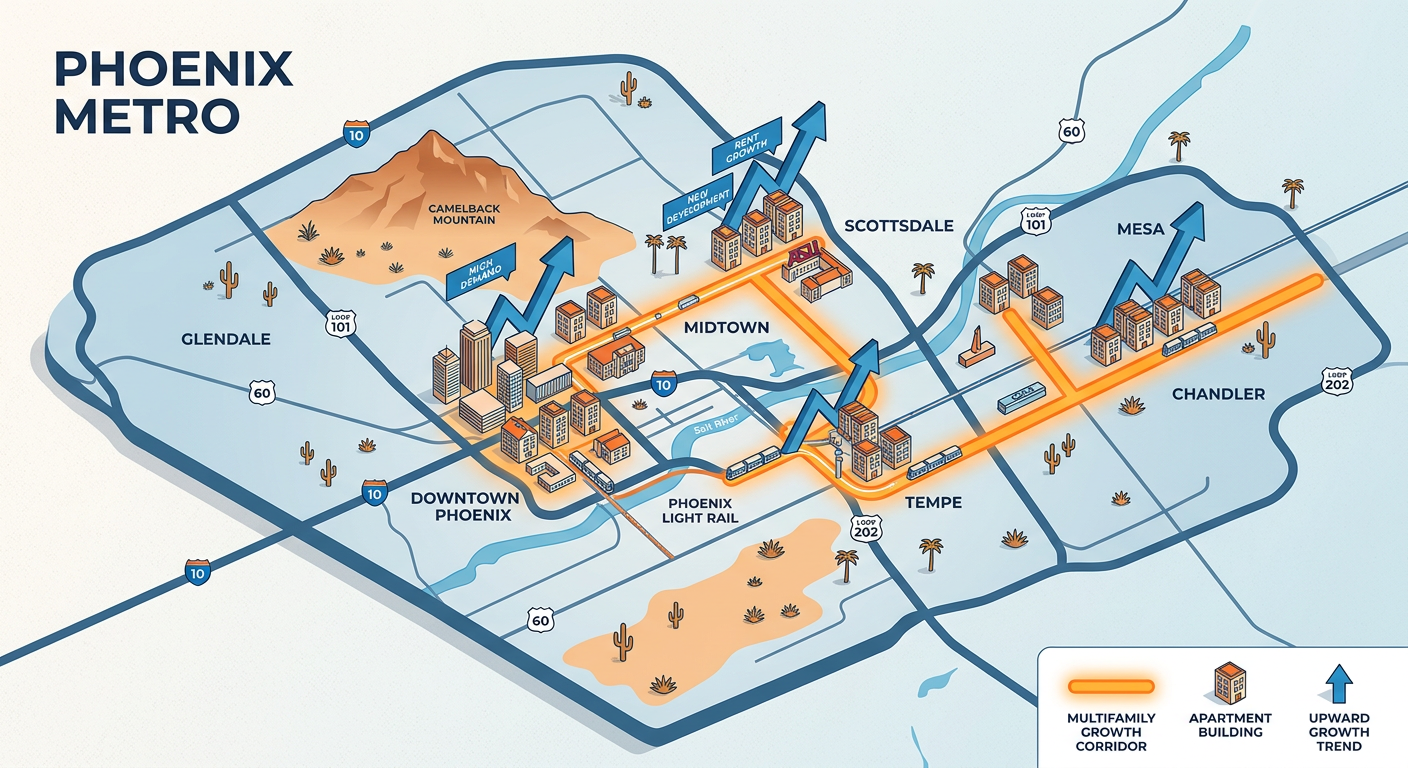
Phoenix has become one of the most closely watched Sun Belt markets because it combines population growth, business expansion, and broad rental demand. That mix supports both workforce housing and value-add assets, especially in submarkets tied to job centers, transit, and lifestyle amenities.
For investors, the appeal is simple. Strong household formation can support occupancy, while a diversified economy can reduce reliance on a single tenant base or employer group. For buyers focused on long-term hold strategies, that creates room to underwrite both cash flow and future appreciation.
Where the Best Opportunities Usually Show Up
Core and Near-Core Submarkets
Core locations often attract investors who want stability, easier leasing velocity, and stronger tenant appeal. Near-core areas can be especially compelling when they combine access to major roads, employment nodes, and established neighborhood demand.
These properties may not always deliver the highest initial yield, but they often reduce vacancy risk and appeal to a wider renter pool. That can be attractive if your plan is to preserve capital and lower operational friction.
Growth Corridors and Infill Areas
Infill markets often offer a balance between affordability and demand. As the city expands, these corridors can benefit from spillover housing demand, improving retail access, and infrastructure upgrades.
For investors, this is where underwriting discipline matters most. Rent growth potential is important, but so is the condition of the asset, the quality of surrounding development, and whether the area supports long-term tenant retention.
Value-Add and Light Repositioning Plays
Many buyers are still looking for assets where operational improvement can create value. That can include modest unit upgrades, better amenity packages, improved curb appeal, or stronger management execution.
The best value-add deals are not always the most obvious. Sometimes the strongest opportunity is a property with solid bones, a proven submarket, and room for incremental rent growth without taking on a full-scale renovation risk.
What Investors Should Underwrite Carefully
Rent Growth Expectations
It is tempting to assume every Phoenix asset will keep rising quickly, but underwriting should stay grounded. Rent growth can vary by submarket, unit mix, and supply timing, so your assumptions should reflect current leasing conditions rather than broad market enthusiasm.
This is especially important if you are comparing newer product to older workforce housing. The rent story can look very different depending on whether the property competes on finish level, location, or affordability.
Supply Risk
New development can influence performance, especially in submarkets where deliveries cluster. When supply rises faster than absorption, landlords may need to compete harder on concessions, pricing, and renewals.
That does not eliminate opportunity, it just means you need to know which pockets of Phoenix are still absorbing new inventory well and which ones may face pressure in the near term.
Operational Efficiency
A multifamily deal is not only about purchase price. It is also about collections, maintenance, tenant retention, and expense control.
Well-run properties can outperform weaker assets even in the same ZIP code. That is why experienced investors often focus on both acquisition and execution from day one.
How Buyers Can Position Themselves
If you are active in phoenix multifamily investment opportunities, a clear strategy helps you move faster and negotiate better. Start by defining your target range, preferred submarkets, and whether you are looking for stabilized income or upside through repositioning.
You should also align your financing, diligence, and management plan before you make an offer. That can shorten timelines, reduce surprises, and make you more credible in a competitive process.
For buyers who want a broader market view, resources like Research and Investment Sales can help frame the opportunity more clearly. If you are also comparing residential investment options, browsing For Sale Listings can give you a sense of how single-family demand is shaping the wider housing market.
Why Local Expertise Matters
Phoenix is not a one-size-fits-all market. Two properties that look similar on paper can perform very differently once you factor in tenant profile, neighborhood momentum, school access, commute patterns, and nearby development.
That is why local insight matters so much. A broker who understands both investor math and neighborhood-level demand can help you avoid overpaying for a story that sounds better than the actual rent roll.
If you are planning a move, want to compare options, or need help evaluating a potential acquisition, the right guidance can save time and reduce risk. You can also review Who We Are to learn more about the team behind the market analysis.
Quick Takeaway
Phoenix still offers real multifamily upside, but the best deals are the ones backed by location quality, realistic underwriting, and smart execution. Investors who focus on submarket fundamentals and operational improvement tend to be better positioned than those chasing headline-level growth alone.
FAQ
Is Phoenix still a good market for multifamily investors?
Yes, Phoenix can still be attractive for investors who understand submarket variation, supply risk, and the difference between stabilized income and value-add upside. The opportunity is there, but selectivity matters.
What types of properties tend to perform best?
That depends on your goal. Stabilized assets may suit investors seeking steady income, while older properties in strong locations may appeal to buyers looking for renovation or repositioning potential.
How important is location in Phoenix multifamily deals?
Very important. Proximity to employment, transportation, retail, and lifestyle amenities can materially affect occupancy, rent growth, and tenant retention.
Should I focus on cash flow or appreciation?
Ideally both, but your priority should match your hold period and risk tolerance. Some investors want current income, while others are more willing to accept lower yield in exchange for future upside.
Can out-of-state investors compete in Phoenix?
Absolutely, but they usually benefit from local representation, stronger due diligence, and a clear plan for management after closing. The market rewards preparation.
How do I know if a deal is overpriced?
Look beyond asking price and compare occupancy, expense load, rent comps, capital needs, and realistic exit assumptions. If the numbers only work under aggressive growth assumptions, the deal may be stretched.
Take the Next Step
If you are evaluating Phoenix acquisitions, the smartest move is to get a grounded opinion before you overcommit. A focused review of pricing, rent potential, and submarket trends can help you identify whether a property is a real opportunity or just a good story.
Thinking about buying or selling real estate in Phoenix?
Call 602-281-6202 or
contact us here
to get local guidance and a clear next step.
About Natan Jacobs
NatanJacobs.com is a Phoenix-based real estate resource from Vestis Group, helping buyers, sellers, and investors
navigate residential, multifamily, and commercial real estate across Arizona. We provide hands-on guidance, market insight, and transaction execution with a focus on clear strategy and real results.
Explore Services & Resources
- For Sale Listings
- Investment Sales
- Leasing
- Tenant Representation
- Research
- Cash Offer
- List My Property
- Contact
Talk With Us
Call 602-281-6202
Email info@vestis-group.com
Contact: https://natanjacobs.com/contact/