

Phoenix Real Estate Investment Opportunities That Pencil Out
A strong real estate investment is rarely found by chasing the loudest listing or the highest projected rent. In Phoenix, the better approach is to start with the property’s real income potential, neighborhood demand, operating costs, and a realistic exit plan.
Phoenix real estate investment opportunities can include a future rental home, a duplex or fourplex, an apartment asset, or a commercial property with leasing upside. The right fit depends on what you need the investment to do, how much operational work you can take on, and how well the deal holds up when the numbers get less optimistic.
Phoenix Real Estate Investment Opportunities Start With a Clear Objective
The first decision is not where to buy. It is deciding what a successful outcome looks like for your household or portfolio.
An owner-occupant may buy a home in a durable neighborhood, enjoy it for several years, and keep the option to rent it later. A first-time investor may prioritize a lower-maintenance rental with dependable tenant demand. A more experienced buyer may target a value-add duplex, small multifamily property, or commercial building where better leasing can improve income and future value.
Before touring properties, define your primary goal:
- Monthly cash flow after all operating costs
- Long-term appreciation potential
- A future primary residence or relocation option
- A renovation and resale opportunity
- Income growth through better management or leasing
- A planned sale within a specific holding period
This matters because one property cannot reliably maximize every outcome. A newer single-family home may offer easier upkeep and a wider resale audience, while an older duplex may create more hands-on work but give you more control over income.
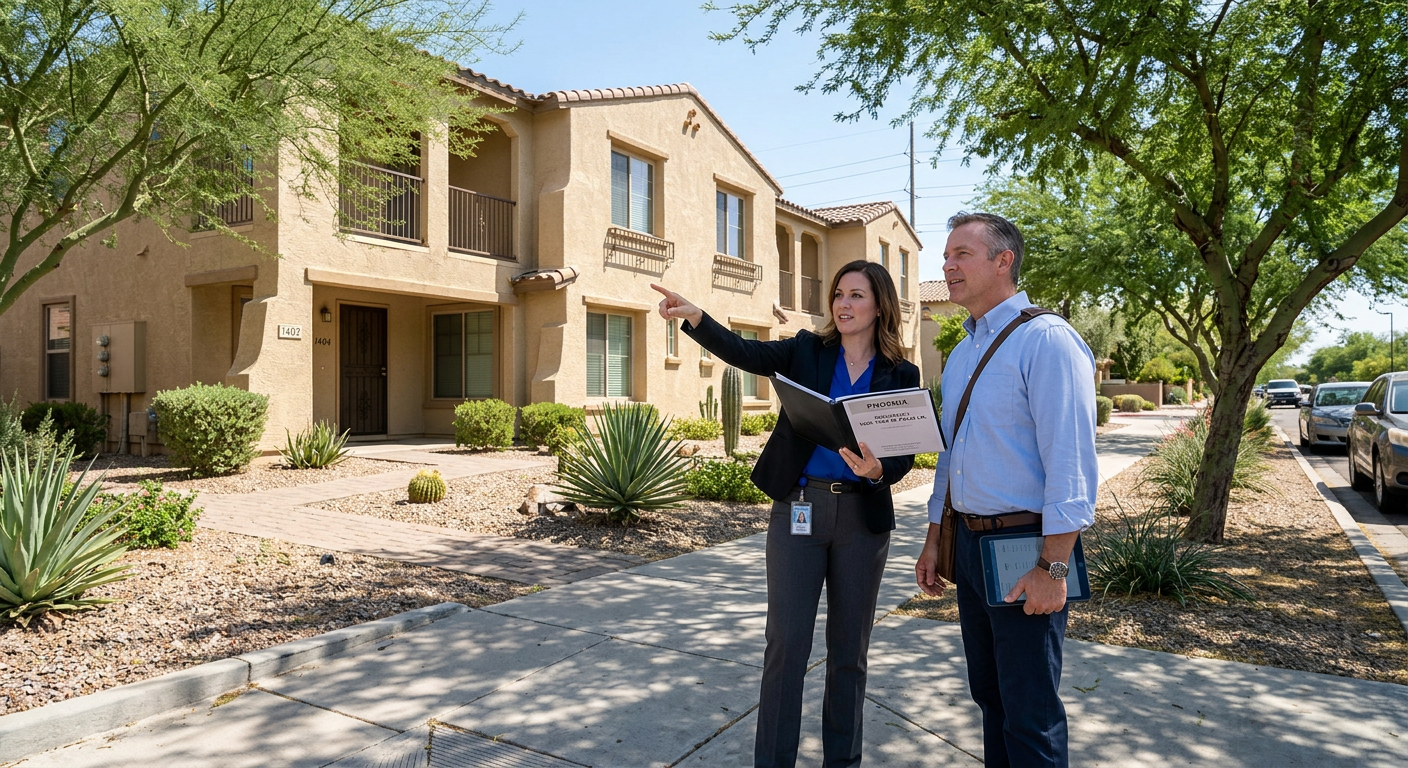
For an active starting point, review Phoenix-area properties currently offered for sale with a written buy box in hand. Price range alone is not a buy box. Property type, target area, condition, rent potential, financing terms, and exit timing belong in the decision.
Look for Demand Drivers, Not Just a Popular ZIP Code
Location still drives performance, but citywide headlines are not enough to underwrite a specific property. A neighborhood can have strong long-term appeal and still contain blocks with different school access, commute patterns, housing stock, tenant profiles, and resale demand.
For residential investors, we look closely at the daily reasons people choose an area:
- Access to major employment centers and freeways
- Nearby schools, parks, retail, and healthcare
- Home condition relative to competing rentals and listings
- Lot size, parking, and functional floor plans
- HOA rules, rental restrictions, and pending assessments
- The depth of the owner-occupant buyer pool for a future sale
Demand is also tied to affordability. The City of Phoenix notes that HUD’s 2026 fair market rent for a two-bedroom apartment in Maricopa County is $1,839, underscoring why rent assumptions and household affordability deserve careful attention before an investor relies on aggressive projections. City of Phoenix Housing Phoenix Plan (phoenix.gov)
What this means for you is simple: do not assume a strong Phoenix address guarantees a strong investment. Compare the property against direct rental competition and recent sales in its immediate area. The right basis can matter more than a well-known neighborhood name.
Use a Day-Four Underwriting Test Before You Make an Offer
The excitement of finding a property often fades by day four, when inspection concerns, insurance quotes, repair estimates, and financing details begin to show up. That is exactly when a deal should be tested again.
A disciplined underwriting review should include more than the advertised rent and mortgage payment. Build in the costs that continue after closing:
- Property taxes and insurance
- HOA fees and rental rules
- Repairs, maintenance, and major capital expenses
- Vacancy and leasing costs
- Property management, even if you plan to self-manage
- Utilities paid by the owner
- Renovation costs, permits, and holding expenses
- Financing costs and reserves for unexpected repairs
Stress-Test the Rent Assumption
Use market-supported rent ranges, not the highest online estimate. Review similar active rentals, recent leased comparables when available, condition, parking, yard usability, appliances, and whether the property will compete with newer inventory.
A rental that only works at the top of the rent range may not provide enough margin. We prefer an analysis that remains workable if rent lands below the optimistic case, vacancy lasts longer, or a repair arrives sooner than expected.
Put the Exit Strategy on Paper
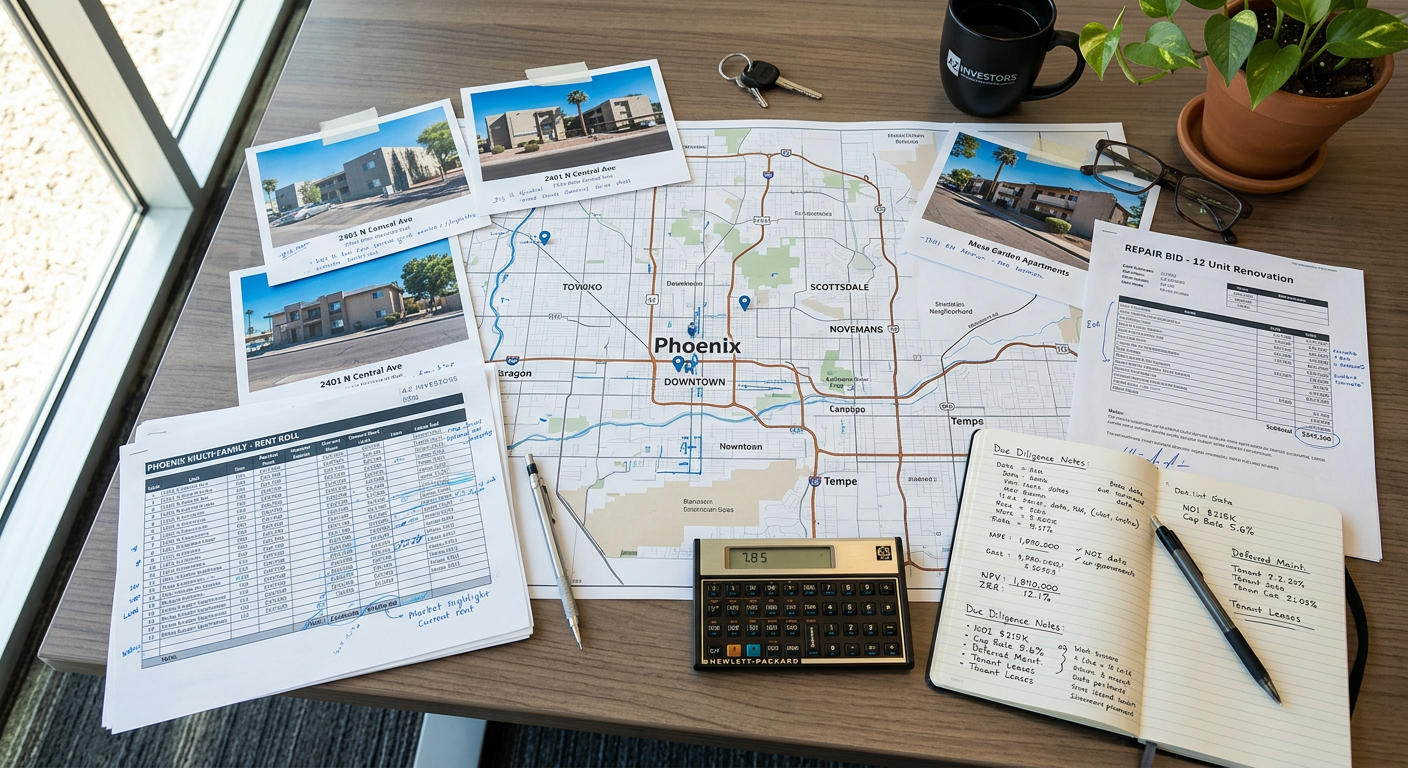
Every acquisition should have at least two sensible exits. For a residential rental, that may mean holding for income or selling to an owner-occupant buyer later. For a multifamily asset, it may mean improving operations and refinancing, or selling once income and occupancy are stabilized.
A commercial property requires another layer of review. Tenant quality, lease length, renewal probabilities, capital needs, and future leasing demand can affect value as much as the building itself. Buyers weighing these larger decisions can use local investment sales guidance to frame value, income, and disposition options together.
Match the Property Type to Your Time, Capital, and Risk Tolerance
The best Phoenix investment opportunities are not limited to one asset class. Each option comes with a different operating model and a different buyer pool when it is time to sell.
Single-Family Homes and Condos
Single-family homes can offer familiar ownership, broad resale demand, and the flexibility to sell to either an investor or an owner-occupant. The tradeoff is that one vacancy can mean zero rental income, and HOA restrictions may limit leasing options or raise monthly costs.
Condos can present a lower entry price in some locations, but investors need to review HOA financials, rental caps, insurance responsibilities, special assessments, and the ratio of owner-occupants to rentals.
Duplexes, Triplexes, and Fourplexes
Small multifamily properties can spread vacancy risk across more than one unit and may provide room to improve income through renovations or better operations. They also require closer review of separate utility metering, roof and sewer condition, deferred maintenance, tenant leases, and local rent comparables.
For owner-occupants, living in one unit while leasing the others can be a practical way to learn property operations. The decision should still be based on the full financial picture, not simply the idea of having tenants help cover a mortgage.
Larger Multifamily and Commercial Assets
Larger properties are primarily valued through income performance. That makes rent rolls, expense history, lease quality, tenant retention, market rents, and capital expenditures central to the analysis.
Commercial owners and investors should also think about the leasing plan early. A vacancy is not merely empty space. It can require improvements, marketing time, concessions, and a clear target tenant profile. Review commercial leasing support for Phoenix owners when the investment thesis depends on filling, renewing, or repositioning space.
Know What a Seller Can Do to Protect Investment Value
Investors are not the only people who benefit from thinking in terms of income, risk, and exit strategy. Owners of rental homes, small multifamily properties, and commercial assets can improve their eventual sale process by organizing the information buyers need.
For an income-producing property, prepare:
- Current leases and a clean rent roll
- Operating statements and utility history
- Repair records and capital improvement details
- HOA documents, if applicable
- Tenant communication plans and access procedures
- Information on zoning, parking, or use restrictions
A buyer will price uncertainty into an offer. Clear records help investors understand the property faster and can widen the pool of qualified prospects. If an owner is deciding whether to hold, improve, lease, or sell, the best answer usually comes from comparing projected outcomes rather than choosing based on a headline or a neighbor’s experience.
Quick Takeaway
Phoenix offers real investment potential across residential, multifamily, and commercial property types, but no market-wide trend can replace property-level analysis. We recommend buying only when the purchase basis, realistic income, operating costs, condition, local demand, and exit options support the same decision.
For buyers, that may mean passing on a polished listing that has thin margins. For sellers, it may mean preparing better financial records and presenting the asset around the factors that matter to the next owner.
Common Questions About Phoenix Investment Property
Is Phoenix still a good market for rental property investors?
Phoenix can be a good rental market for investors who buy with conservative assumptions and select locations with durable renter and buyer demand. The property still needs to support its own numbers after expenses, vacancy, maintenance, and financing costs are included.
How much cash should we reserve after buying an investment property?
The right reserve depends on the property’s age, condition, tenant profile, financing, and renovation needs. We generally advise buyers to plan beyond the down payment and closing costs so a vacancy, HVAC replacement, plumbing repair, or turnover does not force a rushed decision.
Is a duplex safer than a single-family rental?
A duplex can reduce the impact of one vacant unit because another unit may still produce income. It can also bring more maintenance, tenant coordination, and possible capital needs, so safety depends on the asset’s condition and the quality of the underwriting.
Should we buy a Phoenix home first and rent it out later?
That approach can work when the home fits your current lifestyle and would also appeal to future renters and resale buyers. Review potential rent, HOA policies, neighborhood competition, and likely maintenance costs before treating a primary residence as a guaranteed future rental.
What is the biggest mistake first-time real estate investors make?
The most common mistake is underwriting only the best-case scenario. Buyers should examine conservative rent, real expenses, repair exposure, financing changes, and a clear plan for selling or holding the property if conditions shift.
Do commercial properties create better returns than residential rentals?
Commercial assets can produce attractive income, but they also involve different risks, including longer vacancy periods, tenant improvements, lease negotiations, and more specialized resale demand. The better choice depends on your capital, experience, desired involvement, and ability to handle volatility.
The Bottom Line
The strongest investment decisions are grounded in details that remain true after the initial excitement wears off. If the property works with realistic rent, complete expenses, a sensible reserve, and more than one exit path, you have a foundation worth pursuing.
We encourage buyers and sellers to treat every Phoenix real estate investment decision as both a property decision and a business decision. That approach creates more clarity before an offer, during due diligence, and when it is time to hold, lease, improve, or sell.
Build a Clearer Plan for Your Next Property
Thinking about buying or selling real estate in Phoenix?
Call 602-281-6202 or
contact us here
to get local guidance and a clear next step.
About Natan Jacobs
NatanJacobs.com is a Phoenix-based real estate resource from Vestis Group, helping buyers, sellers, and investors
navigate residential, multifamily, and commercial real estate across Arizona. We provide hands-on guidance, market insight, and transaction execution with a focus on clear strategy and real results.
Explore Services & Resources
- For Sale Listings
- Investment Sales
- Leasing
- Tenant Representation
- Research
- Cash Offer
- List My Property
- Contact
Talk With Us
Call 602-281-6202
Email info@vestis-group.com
Contact: https://natanjacobs.com/contact/