Phoenix ZIP Code Growth Report: Demand Signals for Home Buyers
A citywide headline can tell you Phoenix is growing, but it can’t tell you where your next opportunity sits. A buyer comparing two homes, a seller setting expectations, or an investor weighing rental demand needs a more local lens. That is where a Phoenix ZIP Code Growth Report becomes useful.
We look beyond a single appreciation number and focus on the forces that can create lasting demand, including new housing, employment access, lifestyle amenities, transportation, and the supply of homes competing for attention. The point is not to chase the loudest ZIP code. It is to understand which locations fit your timeline, budget, and risk tolerance.
Phoenix ZIP Code Growth Report: The Quick Takeaway
| Growth signal | What it can mean | Best fit | Watch closely |
|---|---|---|---|
| New-home activity | Expanding housing choice | Buyers wanting newer homes | Resale competition and build-out pace |
| Job and retail access | Deeper daily convenience | Owner-occupants and renters | Traffic and future supply |
| Limited land supply | Scarcity can support demand | Long-term buyers and sellers | Entry price and affordability |
| Infill redevelopment | Neighborhood evolution | Buyers seeking central access | Block-by-block variation |
| Rental depth | More tenant demand drivers | Residential investors | Operating costs and vacancy |
The broader growth backdrop is still meaningful. The Maricopa Association of Governments estimated its planning area at more than 5 million residents on July 1, 2024, after adding 65,641 people in a single year. That does not mean every Phoenix neighborhood will move in the same direction, but it does reinforce why local housing decisions deserve more than metro-wide averages. Maricopa Association of Governments population estimates

Why ZIP Code Growth Is More Complicated Than Population
ZIP codes are practical for home searches, mailing addresses, and market conversations, but they are not perfect neighborhood boundaries. Census reporting often uses ZIP Code Tabulation Areas, which are statistical approximations rather than identical postal ZIP codes. That distinction matters when comparing population, household, income, and housing data over time.
We also recommend treating small-area data as a direction signal, not a guarantee. The U.S. Census Bureau notes that American Community Survey estimates are survey-based and can include margins of error, especially in smaller geographies. Use them alongside active listings, closed sales, new permits, commute patterns, and a close look at the streets you are actually considering. U.S. Census Bureau ACS data guidance
Here’s the thing: a ZIP code can add residents while home values flatten if a large amount of new supply reaches the market at once. Another ZIP code may grow slowly in population but perform well because it has constrained resale inventory, strong schools, convenient employment access, or a lifestyle buyers consistently value.
Growth Areas We Are Watching Across Phoenix
North Phoenix and the I-17 corridor
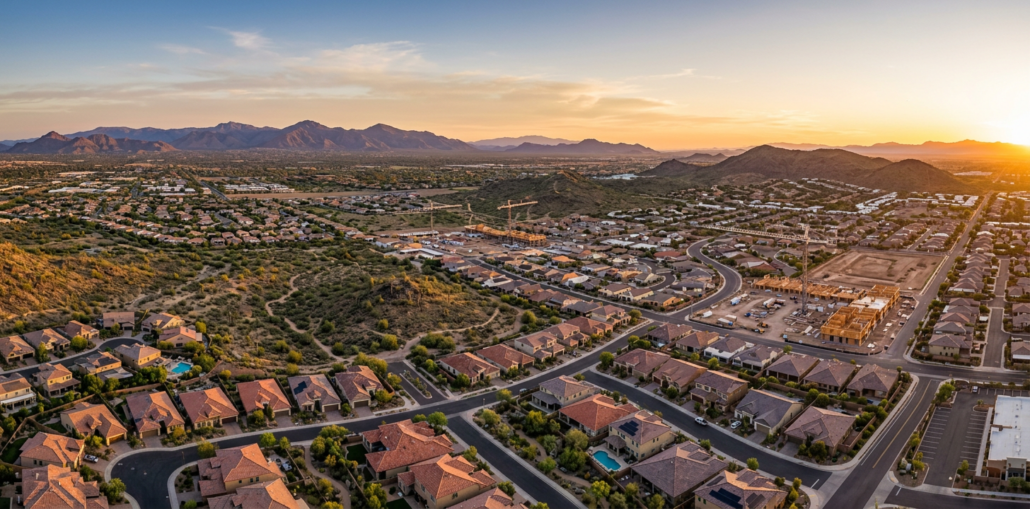
North Phoenix ZIP codes such as 85085, 85083, and nearby master-planned areas continue to draw attention from buyers who want newer construction, larger floor plans, mountain access, and relative proximity to major employment corridors. These locations can offer more choice than built-out central neighborhoods, particularly when builders and resale owners are both active.
For buyers, the key is comparing the full monthly cost, not simply the list price. Newer communities can bring HOA fees, special assessments, longer drives, or higher cooling costs depending on the property. For sellers, newer nearby inventory means presentation and pricing discipline matter more, even in a fundamentally desirable area.
For a deeper look at locations that may fit a long-range strategy, see our guide to Phoenix ZIP codes with growth potential.
Desert Ridge, High Street, and Northeast Phoenix
Northeast Phoenix areas around 85050 and 85054 benefit from a different mix of demand drivers. Buyers often prioritize access to employment, dining, health care, shopping, golf, and established freeway connections. That blend can support both owner-occupant appeal and rental interest, but the price point is usually higher than fringe growth locations.
We would not describe these areas as a simple bargain play. Their appeal is more about convenience, amenities, and a mature lifestyle ecosystem. A buyer moving from out of state may value that predictability, while a seller can benefit from marketing the daily experience of the location rather than relying on square footage alone.
West Phoenix and infill opportunities
West Phoenix is not one story. Some areas are shaped by employment and logistics activity, some by stadium and entertainment access, and others by established residential neighborhoods with different housing ages and price ranges. ZIP codes in this part of the city can reward careful street-level analysis because the experience can change quickly from one pocket to the next.
For buyers, an infill location may offer a shorter commute or a lower entry point than more established north and northeast options. For sellers, nearby new development can be a positive signal, but it should not replace a careful review of comparable sales, property condition, and buyer financing realities.
Central Phoenix and supply-constrained neighborhoods
Central Phoenix growth often looks less like a sea of new rooftops and more like redevelopment, renovation, multifamily construction, and steady demand for proximity. Neighborhoods near major hospitals, downtown employment, restaurants, and cultural destinations can attract buyers who value time and access over a large lot or a brand-new build.
The tradeoff is clear. Homes may be older, lots and floor plans can vary widely, and pricing can be highly sensitive to condition. Still, when available land is limited, well-positioned homes can stand apart from newer suburban alternatives.

How We Evaluate a ZIP Code Before Making a Move
A useful ZIP code report should lead to a decision, not just more tabs open in your browser. We recommend reviewing these five questions before writing an offer, listing a home, or underwriting a rental property.
Is housing supply expanding or tightening?
Look at active inventory, pending sales, days on market, price reductions, and the amount of nearby construction. More supply can create negotiating room for buyers. It can also mean sellers need stronger pricing, better preparation, and a marketing plan that clearly explains why their home deserves attention.
What is driving daily demand?
Employment centers, schools, health care, retail, recreation, and commute routes all influence how a home lives. A location does not need every amenity on the doorstep, but it should have a credible value proposition for the people most likely to buy or rent there.
Are the homes truly comparable?
This is where broad ZIP code averages can mislead. A 1980s single-family home, a new-build townhome, and a luxury gated property may share a ZIP code but serve completely different buyers. We narrow the analysis by property type, size, condition, lot characteristics, and immediate competition.
What could change during your holding period?
Future road projects, new retail, school changes, major employers, multifamily deliveries, and new subdivisions can all affect demand. Buyers should ask what may be built around them. Sellers should understand which coming improvements are real, approved, and relevant enough to mention in marketing.
Does the investment work without a perfect forecast?
No ZIP code is immune to changing rates, affordability constraints, or shifts in buyer confidence. A smart purchase should make sense because the home fits your life or your investment plan today, not because you assume every future price chart points upward.
Our fastest-growing Phoenix ZIP code analysis offers another starting point, while our Phoenix real estate research resources can help you frame a more complete local review.
What This Means for Phoenix Buyers, Sellers, and Investors
For home buyers
Growth should widen your shortlist, not force a rushed decision. If you are relocating, begin with lifestyle priorities such as commute, school preferences, lot size, outdoor access, and proximity to family or work. Then compare homes within the ZIP codes that meet those needs, rather than assuming the fastest-growing area is automatically the best fit.
For home sellers
A growth narrative can help, but buyers still purchase the specific home in front of them. We focus on the details that convert interest into offers: accurate pricing, repairs that reduce objections, thoughtful staging, professional positioning, and a clear explanation of the home’s location advantages.
If you are weighing a traditional sale against speed and certainty, review your options through our Phoenix cash offer resource before deciding which path fits your goals.
For residential investors
Rental demand needs to be assessed differently than owner-occupant demand. Consider household formation, nearby jobs, competing rentals, property taxes, HOA restrictions, insurance, maintenance, and the specific tenant profile a property is likely to attract. A growing ZIP code can be attractive, but a disciplined operating plan is what protects the investment.
Frequently Asked Questions
Which Phoenix ZIP codes are growing the fastest?
The answer changes based on the metric. Population growth, new-home deliveries, household income, job access, rent growth, and resale demand can point to different ZIP codes. We recommend evaluating the metric that matches your goal instead of relying on a single ranking.
Does population growth always raise home values?
No. Population growth can increase demand, but home values also depend on mortgage rates, inventory, new construction, affordability, buyer incomes, and local property condition. Growth is a useful signal, not a promise.
Are North Phoenix ZIP codes good for relocation buyers?
They can be a strong fit for buyers seeking newer homes, mountain views, community amenities, and access to north Valley employment corridors. The best choice depends on commute needs, budget, preferred home style, and tolerance for ongoing development nearby.
Should sellers mention nearby development in their listing?
Yes, when it creates a clear buyer benefit and the information is accurate. New retail, employment access, recreation, or transportation improvements can strengthen a listing narrative, but the message should remain specific and credible.
How often should we review ZIP code data?
For an active buyer or seller, we recommend a fresh review before pricing a listing or submitting an offer. Market conditions can shift quickly, and the most useful data is always paired with current competition and recent closed sales.
Make Your Next Phoenix Move With Better Local Context
The best Phoenix ZIP code is rarely the one with the flashiest headline. It is the one where the home, lifestyle, price, and long-term plan work together. When we combine local growth signals with property-level facts, you can make a decision with more confidence and fewer assumptions.
Thinking about buying or selling real estate in Phoenix?
Call 602-281-6202 or
contact us here
to get local guidance and a clear next step.
About Natan Jacobs
NatanJacobs.com is a Phoenix-based real estate resource from Vestis Group, helping buyers, sellers, and investors
navigate residential, multifamily, and commercial real estate across Arizona. We provide hands-on guidance, market insight, and transaction execution with a focus on clear strategy and real results.
Explore Services & Resources
- For Sale Listings
- Investment Sales
- Leasing
- Tenant Representation
- Research
- Cash Offer
- List My Property
- Contact
Talk With Us
Call 602-281-6202
Email info@vestis-group.com
Contact: https://natanjacobs.com/contact/