

Phoenix Real Estate Investment Properties: 2026 Strategy Guide
Buying an investment property is rarely about finding the cheapest house on the map. It is about finding an asset with a realistic path to durable income, manageable expenses, and future resale appeal. In a market as large and varied as Metro Phoenix, the neighborhood, property type, condition, tenant profile, and financing structure can change the math dramatically.
That is why Phoenix real estate investment properties deserve a more disciplined approach than simply chasing a promising rental estimate. Investors, future owner-occupants, and move-up buyers all benefit when they understand how current inventory, pricing, rents, and location-specific demand work together before making an offer.
What The Current Phoenix Market Means For Investors
Phoenix is not one uniform real estate market. A renovated single-family rental in a mature infill neighborhood has a different risk profile than a newer build in the West Valley, a condominium near a job center, or a small multifamily property with operational upside.
The most useful current signal is that buyers have more room to evaluate deals than they did during the fastest-paced years of the market. The Phoenix REALTORS market report, current as of August 4, 2026, reported a June median single-family sales price of $486,615, 3.8 months of single-family inventory, and an average of 76 days on market. Those numbers do not guarantee discounts, but they support a more selective, inspection-driven buying process.
| Investment Type | Best Fit | Core Opportunity | Key Watchout |
|---|---|---|---|
| Single-family rental | New investors | Broad renter appeal | Repairs and turnover |
| Duplex to fourplex | Hands-on investors | Multiple income streams | Financing and condition |
| Condo or townhome | Lower-maintenance buyers | Entry price and location | HOA rules and fees |
| Small multifamily | Experienced investors | Scale and value-add potential | Operating expense accuracy |
| Commercial property | Business owners and investors | Lease income and strategic use | Vacancy and lease structure |
Price Still Matters, But Basis Matters More
A lower purchase price can look attractive until deferred maintenance, insurance, property taxes, HOA fees, vacancy, and leasing costs are included. We encourage buyers to model the full cost of ownership, not only their expected mortgage payment.
For example, a property with a modest rent premium may be more valuable than a cheaper alternative if it is closer to major employment, offers a functional floor plan, has low-maintenance finishes, and attracts a deeper pool of qualified renters. A strong basis is built on all-in cost, not just the contract price.
Competition Is Real, But It Is Not The Whole Story
Institutional ownership gets plenty of attention, yet it should not discourage individual buyers from pursuing well-defined opportunities. A U.S. Government Accountability Office report found that institutional investors owned only 1% to 3% of all single-family homes in the six metro areas it reviewed, including Phoenix, as of 2024.
The practical takeaway is simple. Smaller investors can still compete by acting quickly on clean opportunities, using thoughtful terms, and avoiding properties that only work under overly optimistic assumptions.

How To Evaluate Phoenix Real Estate Investment Properties
The best investment plan starts before the property tour. We recommend defining the return you need, the work you can realistically manage, and the timeline you are willing to hold before comparing individual opportunities.
Start With Your Investment Objective
Not every buyer needs the same property. A relocation buyer may want a home that can become a future rental. A first-time investor may prioritize stable cash flow and low maintenance. An experienced owner may seek a value-add duplex, small apartment property, or commercial building with a leasing opportunity.
Clarify which outcome matters most:
- Monthly cash flow
- Long-term appreciation potential
- A future primary residence
- Tax planning with professional guidance
- Renovation upside
- Portfolio diversification
- Space for your business or future tenant use
When the objective is clear, it becomes easier to rule out properties that look good online but do not match your actual strategy.
Underwrite Conservative Income And Expenses
Rental projections should be verified against comparable active listings, leased properties when available, property condition, and the specific renter audience in that location. A polished home near a major job corridor may command a different rent than an older property only a few miles away.
Build in realistic allowances for vacancy, maintenance, capital improvements, management, utilities, landscaping, insurance, property taxes, HOA dues, and leasing costs. If the deal only works with perfect occupancy and no repair surprises, it is not a resilient deal.
For multifamily assets, review trailing operating statements, rent rolls, utility responsibility, service contracts, tenant delinquencies, deferred maintenance, and lease expiration timing. The headline cap rate is only the beginning of the analysis.
Evaluate The Block, Not Just The ZIP Code
A ZIP code can help narrow the map, but an investment decision needs a closer look. Traffic patterns, school access, nearby retail, employment routes, lot position, neighborhood upkeep, and competing rentals all influence tenant demand and resale potential.
We also look at whether the property offers something renters and buyers can recognize quickly, such as a garage, functional outdoor space, updated systems, split-bedroom layout, home office flexibility, or proximity to major corridors. These details can support both leasing velocity and eventual resale.
For active opportunities, review our Phoenix-area property listings and compare them with your target return requirements rather than shopping by price alone.
Property Types Worth Comparing
Single-Family Rentals
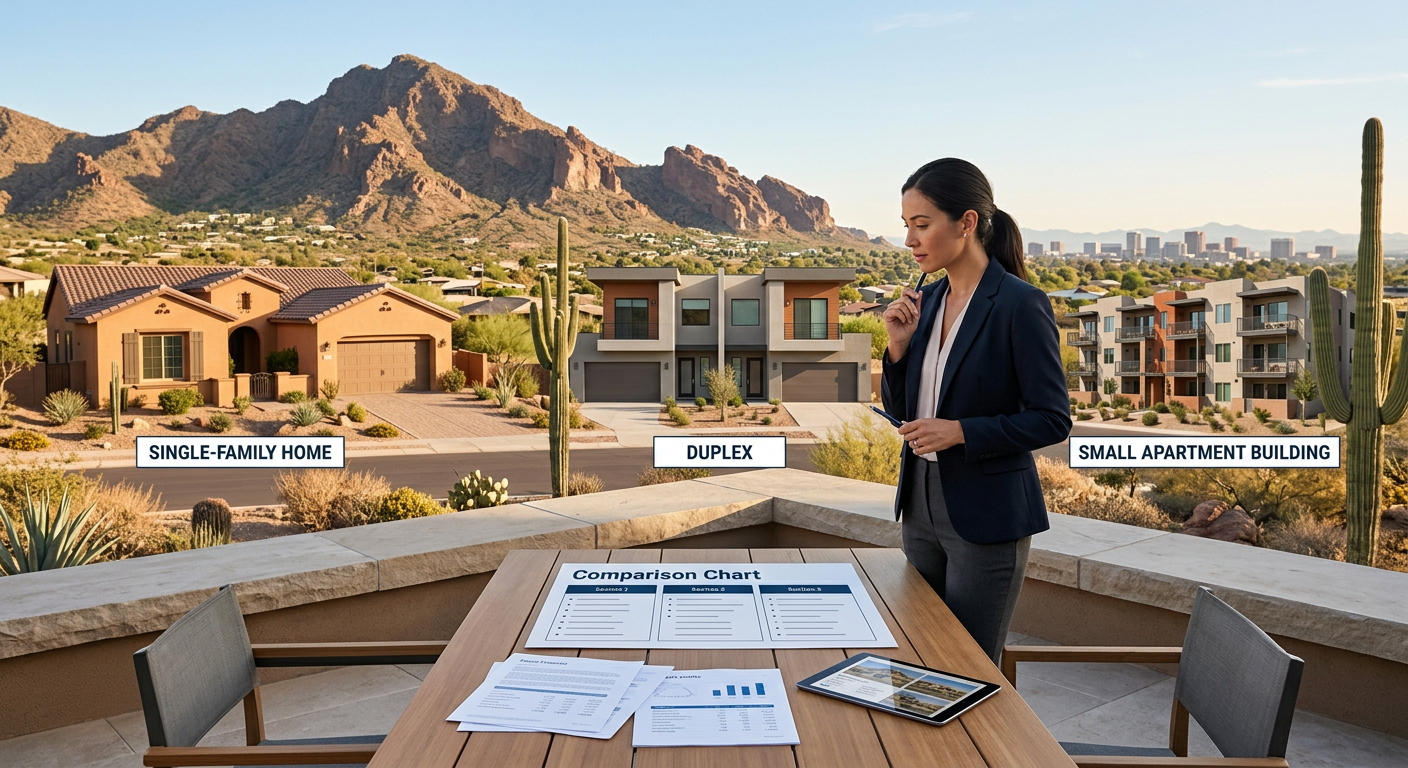
Single-family homes are often the most familiar entry point. They can appeal to renters seeking privacy, yards, garages, and room for pets, while also providing a broad eventual resale audience.
The tradeoff is concentration risk. One vacancy means no rent from that asset, and the owner is responsible for all major repairs. Look closely at roof age, HVAC condition, sewer lines, electrical panels, windows, pool equipment, and irrigation because Arizona heat makes systems reliability especially important.
Duplexes, Triplexes, And Fourplexes
Small residential income properties can spread income across multiple units. If one unit is vacant, the property may still generate revenue from the others. They can also create a practical route for buyers who want to live in one unit while renting the rest.
However, these properties need closer operational review. Confirm separately metered utilities, unit condition, parking, laundry access, lease terms, and realistic renovation scope. Financing rules may also differ from a standard single-family purchase.
Condos And Townhomes
Condos and townhomes can provide a lower-cost entry point in highly convenient locations. They may suit renters who value access to jobs, restaurants, transit, and lower exterior maintenance responsibilities.
The critical step is reviewing the HOA. We want to know the monthly assessment, rental restrictions, pending special assessments, reserve strength, insurance responsibilities, and rules that affect leasing or short-term use. A lower price does not compensate for an HOA structure that blocks your intended plan.
Small Multifamily And Commercial Assets
Larger multifamily and commercial properties demand more detailed financial and lease analysis, but they can provide scale, business-plan flexibility, and operational efficiencies. These assets are often driven by net operating income, tenant quality, lease duration, market rent growth, and capital expenditure needs rather than residential comparable sales alone.
If you are considering an apartment building, retail space, office suite, or industrial asset, our investment sales guidance can help you frame the acquisition around property performance and exit options. Business owners exploring a location should also consider tenant representation services before committing to a lease or purchase.
Due Diligence That Protects Your Downside
The most expensive mistakes usually appear after closing. A disciplined due-diligence period gives you the opportunity to validate income, inspect major systems, understand legal restrictions, and decide whether the asset still matches the plan.
Review These Items Before Removing Contingencies
- Comparable rents and current competing listings
- Seller disclosures and repair history
- Roof, HVAC, plumbing, electrical, sewer, and pool inspections
- Property taxes, insurance quotes, and utility costs
- HOA documents, budgets, rules, and pending assessments
- Lease agreements, rent roll, deposits, and payment history
- Zoning, parking, access, and permitted-use requirements
- Renovation bids with a contingency for unexpected work
The City of Phoenix notes that the 2026 fair-market rent for a two-bedroom home in Maricopa County is $1,839, based on U.S. Department of Housing and Urban Development data. Read the city’s Housing Phoenix Plan for broader local housing context, but do not treat a regional benchmark as a substitute for property-specific rent analysis.
A Smart Offer Strategy In A More Selective Market
A thoughtful offer is about more than price. We look at days on market, competing activity, property condition, seller motivation, financing certainty, inspection needs, and the value of concessions or repair credits.
For a buyer, a longer marketing period can create room to negotiate on price, closing costs, interest-rate buydowns, or repairs. For a seller who owns an investment property, it reinforces the importance of accurate pricing, clean financial records, and a clear story about the asset’s upside. Buyers do not need a perfect property, but they do need evidence that the numbers are credible.
Quick Takeaway
The strongest Phoenix investment opportunities are rarely the ones with the loudest marketing. They are the properties where purchase basis, real operating costs, local demand, condition, and exit strategy all support the same conclusion.
Whether you are buying a first rental, selling a small portfolio, or evaluating a multifamily acquisition, we recommend making decisions from verified property data and a conservative underwriting model. For ongoing market context, explore our Phoenix real estate research and market insights.
Frequently Asked Questions
Are Phoenix rental properties still a good investment?
They can be, but the answer depends on your purchase basis, financing, property condition, expected rent, and hold period. We avoid broad assumptions and evaluate each opportunity based on its likely income, expenses, tenant appeal, and resale potential.
Which Phoenix property type is best for a first-time investor?
A well-located single-family home, townhome, or small duplex can be a practical starting point, depending on your budget and management preferences. The best fit is usually the property type you can underwrite clearly and maintain without stretching your reserves.
How much cash reserve should an investor keep after closing?
There is no universal amount, but you should retain funds for vacancy, urgent repairs, deductibles, turnover, and capital improvements. A reserve plan based on the property’s age, systems, rent level, and financing terms is safer than relying on a single fixed percentage.
Should I buy an investment property through an LLC?
An LLC may offer organizational and liability benefits for some investors, but the right entity structure depends on your financing, insurance, tax situation, ownership plan, and legal advice. Speak with a qualified attorney, tax professional, and lender before making that choice.
Can I buy a Phoenix home now and rent it out later?
Yes, many buyers choose a home with future rental potential. Before you buy, confirm HOA leasing rules, your financing occupancy requirements, likely future rent, ongoing ownership costs, and the property features that support renter demand.
The Bottom Line
Phoenix offers a wide range of real estate investment paths, from rental homes and small multifamily properties to commercial acquisitions and leasing opportunities. The right deal is not defined by a trendy neighborhood name or an aggressive projected return. It is defined by a plan that remains sensible after you account for real costs, real risks, and a realistic exit.
Thinking about buying or selling real estate in Phoenix?
Call 602-281-6202 or
contact us here
to get local guidance and a clear next step.
About Natan Jacobs
NatanJacobs.com is a Phoenix-based real estate resource from Vestis Group, helping buyers, sellers, and investors
navigate residential, multifamily, and commercial real estate across Arizona. We provide hands-on guidance, market insight, and transaction execution with a focus on clear strategy and real results.
Explore Services & Resources
- For Sale Listings
- Investment Sales
- Leasing
- Tenant Representation
- Research
- Cash Offer
- List My Property
- Contact
Talk With Us
Call 602-281-6202
Email info@vestis-group.com
Contact: https://natanjacobs.com/contact/