
Finding a Commercial Lease in Phoenix: Smart Tenant Guide
If you are finding a commercial lease in Phoenix, the biggest mistake is focusing only on rent. The right space is rarely the cheapest one on paper. It is the one that fits your operations, supports your growth, and protects you from costly surprises later.
Phoenix keeps attracting growing companies, medical users, professional services, retailers, and regional operators, which means competition for good space can move fast. That is why a smart leasing strategy matters, especially if you want the right location, tenant improvements, and lease terms that actually support your business.
Finding a Commercial Lease in Phoenix Starts With the Right Plan
Before you tour properties, define what success looks like for your business. Ask yourself how much square footage you really need, what kind of visibility or foot traffic matters, and whether you need offices, warehouse, retail frontage, or a mixed-use setup.
You should also decide what you can spend monthly, including base rent, operating expenses, parking, utilities, insurance, and buildout costs. A lease that looks affordable at first can become expensive if the space needs major improvements or if the expense structure is too aggressive.
Know Your Use Case First
Different businesses need different layouts. A law firm, medical practice, logistics company, salon, and neighborhood retailer all evaluate space differently.
That is why finding a commercial lease in Phoenix becomes easier when you narrow your use case first. Once you know how the space will function, you can eliminate deals that look good but do not fit the business.
Understand Phoenix Submarkets Before You Sign
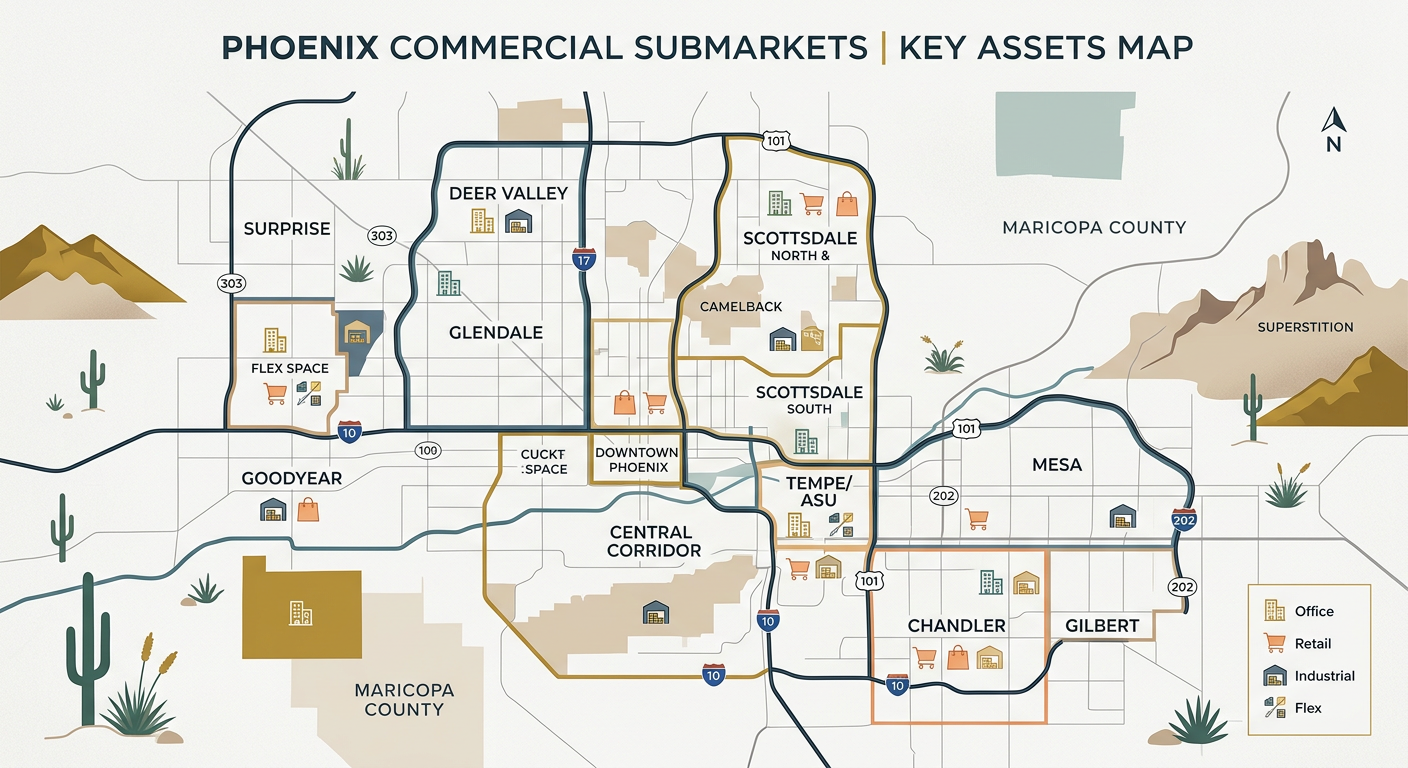
Phoenix is not one uniform market. The best lease in Central Phoenix may not make sense for a business that depends on freeway access, warehouse loading, or a suburban customer base.
Think through submarkets based on your audience and operations. If your business serves walk-in customers, street visibility and surrounding retail matter. If your team commutes from across the metro, access and parking may matter more. If you need industrial or flex space, logistics and labor access can outweigh image.
Match the Space to the Business Model
A lease should support revenue, not just occupancy. For example, a showroom may need high visibility and customer-friendly parking, while a distribution tenant may care more about dock access and trailer circulation.
If your business is growing, think ahead. A space that is too tight today can create an expensive move in 18 months, so leave room for realistic expansion if possible.
Compare More Than Rent and Square Footage
When people start comparing listings, they often look at price per square foot and stop there. That is a fast way to miss the real cost of occupancy.
Instead, compare the full package. Look at lease type, expense pass-throughs, landlord contribution, tenant improvement allowance, term length, renewal options, signage rights, parking, and any restrictions on use. These details often matter more than a small rent difference.
Ask the Right Questions Early
Before you get too far, ask whether the lease is full service, modified gross, or triple net. The structure changes your true monthly cost and can affect your budgeting in a big way.
Also ask how the landlord handles maintenance, roof and structure repairs, after-hours HVAC, and common area expenses. The answers can change a “good deal” into a much better or much worse one.
Negotiate the Parts That Actually Move the Needle
Negotiation is not just about lowering rent. In many cases, the most valuable concessions are free rent, tenant improvement dollars, flexibility in the term, and expansion or termination options.
If the space needs work, negotiate tenant improvements up front and get clear language on who pays for permits, design, construction, and delays. If your opening date matters, make sure the lease timeline supports it.
Protect Yourself With Clear Lease Language
Watch for escalation clauses, repair obligations, sublease restrictions, and personal guaranty terms. These can create long-term risk if they are not negotiated carefully.
A well-written lease should fit the business plan, not just fill the building. This is one reason many tenants work with a local advisor instead of trying to handle everything alone.
Use a Local Broker Who Knows Phoenix Leasing
Commercial leasing in Phoenix moves faster when you have someone tracking the market daily. A local advisor can help you identify off-market opportunities, compare competing spaces, and pressure-test the lease terms before you sign.
If you want a broader look at current opportunities, start with Leasing, review the firm’s Research, or browse the Blog for market perspectives. If your needs are more specialized, Tenant Representation can help align the space with your operating goals.
What a Smart Lease Search Looks Like
Here is the simple version:
- Define your space needs and budget.
- Choose the right submarket for your business.
- Compare lease structure, not just asking rent.
- Negotiate concessions that reduce real occupancy costs.
- Review legal and operational risks before signing.
That process saves time, reduces surprises, and helps you make a cleaner decision.
FAQ
How early should I start looking for a commercial lease in Phoenix?
Start at least six to nine months before your target move date if you need buildout, permitting, or specialized space. If your use is simple, you may be able to move faster, but early planning gives you better leverage.
What lease type is most common in Phoenix commercial real estate?
It depends on the asset class and submarket. Office, retail, and industrial spaces can each use different lease structures, so you should always confirm how expenses are handled before comparing deals.
Can I negotiate tenant improvements?
Yes, and you usually should. Tenant improvement allowances are often one of the most valuable parts of the deal because they help offset the cost of making the space usable for your business.
Do I need a broker for commercial leasing?
You are not required to use one, but it can be a major advantage. A broker can help you compare options, understand hidden costs, and negotiate lease terms that better fit your business.
What should I worry about most before signing?
The biggest issues are usually total occupancy cost, repair obligations, lease flexibility, and use restrictions. Those items can affect your business long after the ink dries.
Make Your Next Move with Confidence
If you are serious about finding a commercial lease in Phoenix, do not just chase the lowest rent. Focus on the space, the structure, and the long-term fit for your business. That is how you avoid surprises and choose a location that supports growth.
Thinking about buying or selling real estate in Phoenix?
Call 602-281-6202 or
contact us here
to get local guidance and a clear next step.
About Natan Jacobs
NatanJacobs.com is a Phoenix-based real estate resource from Vestis Group, helping buyers, sellers, and investors
navigate residential, multifamily, and commercial real estate across Arizona. We provide hands-on guidance, market insight, and transaction execution with a focus on clear strategy and real results.
Explore Services & Resources
- For Sale Listings
- Investment Sales
- Leasing
- Tenant Representation
- Research
- Cash Offer
- List My Property
- Contact
Talk With Us
Call 602-281-6202
Email info@vestis-group.com
Contact: https://natanjacobs.com/contact/