
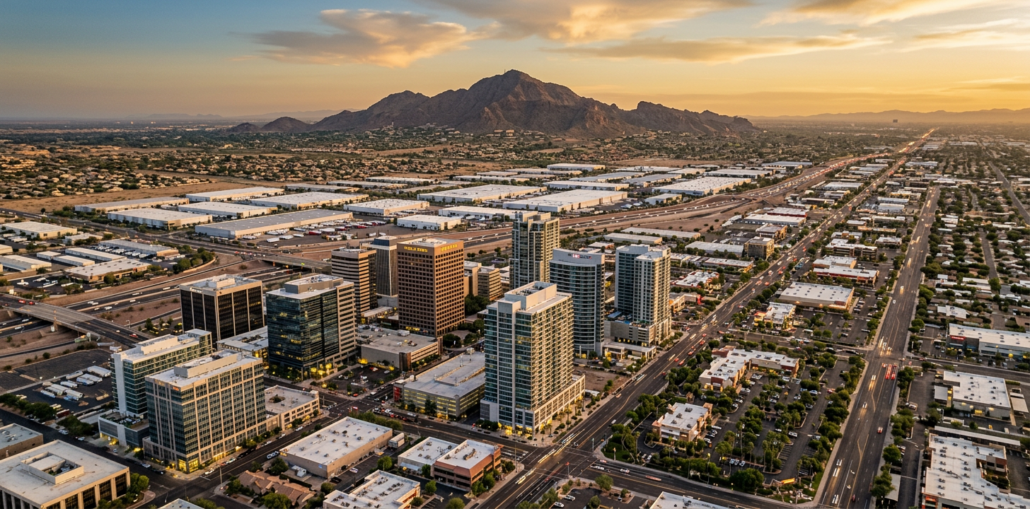
Phoenix Commercial Leasing Trends Shaping 2026 Tenant Decisions
Phoenix businesses are making leasing decisions in a market that no longer moves as one unit. Office tenants are prioritizing quality and location, industrial users are competing for functional space near major corridors, and retail operators are following household growth across the Valley.
For companies evaluating space, Phoenix commercial leasing trends point to a more selective market, not a uniformly landlord-friendly or tenant-friendly one. The strongest opportunities depend on property type, submarket, lease timing, and how thoroughly a tenant compares the full occupancy cost before signing.
For residential buyers, sellers, and investors, commercial activity still matters. New employers, retail amenities, warehouse development, and office investment can shape neighborhood demand, commute patterns, and long-term appeal in the communities surrounding them.
Phoenix Commercial Leasing Trends Are Splitting by Property Type
The key leasing trend in Phoenix is separation. High-quality, well-located buildings are gaining leverage, while older or less functional properties may need more flexible terms to compete.
| Property type | Current market direction | Tenant priority | Landlord approach |
|---|---|---|---|
| Office | Improving, but uneven | Quality, amenities, access | Protect rents in top buildings |
| Industrial | Tightening after supply wave | Power, loading, location | Offer targeted incentives |
| Retail | Strong in growth corridors | Rooftops, visibility, parking | Favor proven concepts |
In its second-quarter 2026 report, CBRE reported Phoenix office vacancy at 19.1%, while average asking rents reached $32.30 per square foot. That combination tells an important story: availability remains meaningful, but tenants seeking newer buildings and established business districts should not assume they can wait indefinitely for a better option.
At the same time, the industrial market is regaining balance. Colliers reported 8.7% industrial vacancy in the second quarter of 2026, with 4.29 million square feet of net absorption. Leasing demand is still absorbing space faster than new deliveries in many parts of Metro Phoenix.
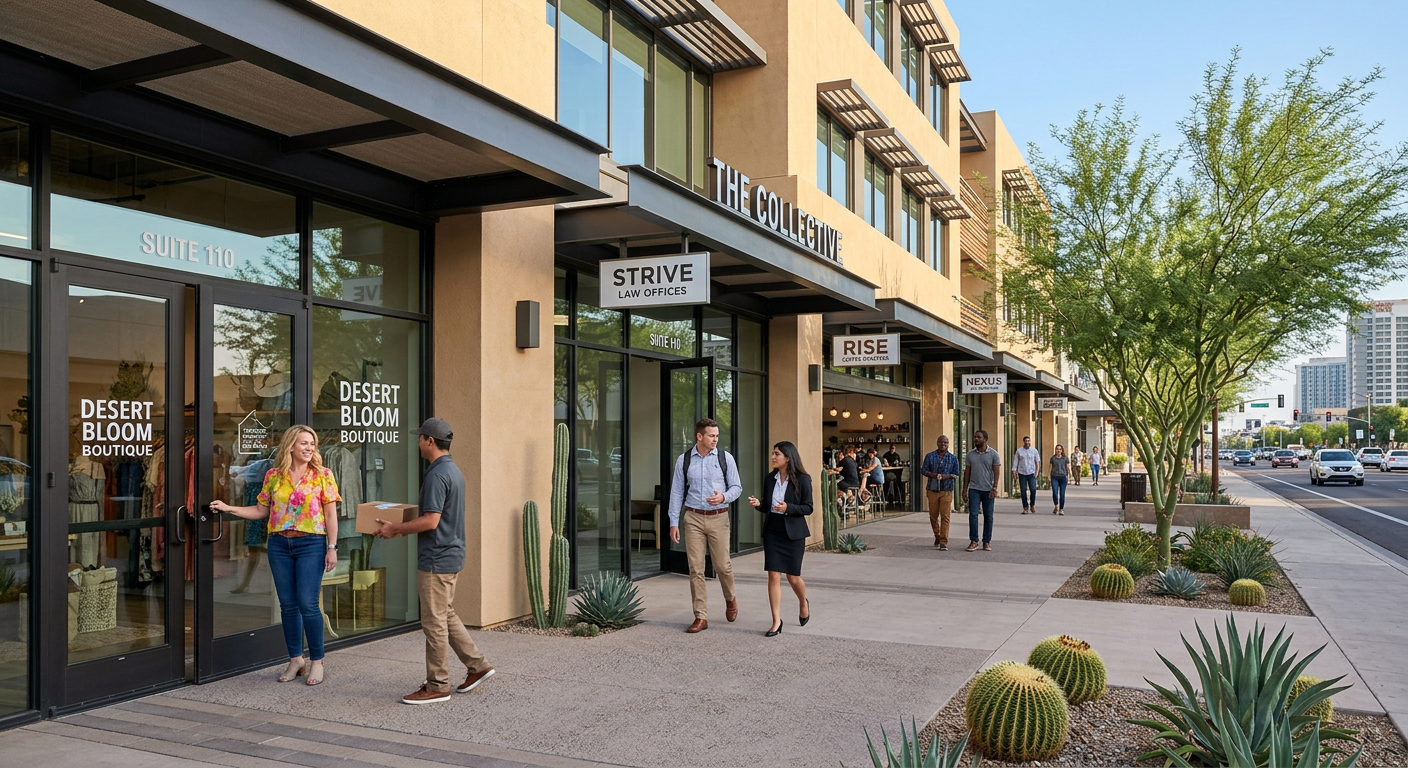
Office Leasing Is Improving, but Quality Drives the Conversation
Phoenix office leasing is recovering, although the recovery is concentrated in specific buildings and submarkets. Tenants have more choices than in a tight office market, but the best spaces are not interchangeable with older alternatives.
Flight to Quality Is Still Real
Class A office properties with strong parking ratios, updated common areas, efficient floorplates, nearby restaurants, and access to major employment centers are attracting outsized interest. Colliers' Phoenix office report found that Class A asking rents averaged $34.92 per square foot in the second quarter of 2026, a 35.3% premium over Class B space.
For tenants, that premium should prompt a practical question: does the building improve hiring, retention, customer access, or operational efficiency enough to justify the added cost? If the answer is yes, paying more for the right space may be less expensive than settling for a lower-rate lease that creates workplace friction.
For landlords, the lesson is equally direct. Cosmetic improvements alone may not close the gap. Building operations, tenant experience, parking, signage, accessibility, and flexible suite sizes can determine whether a property earns a tour.
Submarkets Require Different Negotiating Tactics
A company looking in Tempe, Scottsdale, the Camelback Corridor, Downtown Phoenix, or the Airport Area should not negotiate from a Valley-wide vacancy number. Each area has its own mix of tenant demand, competing inventory, commute patterns, and available concessions.
We recommend tenants review at least three comparable options before submitting a letter of intent. A detailed comparison should include:
- Base rent and annual escalations
- Operating expenses and expense caps
- Tenant improvement allowance
- Free-rent periods
- Renewal options and expansion rights
- Parking costs and signage rights
- Delivery condition and construction timeline
Businesses considering a new office, retail, or industrial location can review our Phoenix tenant representation services for support with site selection, lease strategy, and negotiations.
Industrial Leasing Is Becoming More Competitive Again
Phoenix industrial leasing is tightening as major users absorb large blocks of space, especially in strategic logistics and manufacturing corridors. The West Valley, Southeast Valley, and areas connected to Loop 303 remain central to the conversation.
Colliers reported that the five largest industrial lease transactions in the second quarter of 2026 occurred along the Loop 303 Corridor. The report also noted that headline rents remained steady while landlords increasingly used flexible incentives, including free-rent periods, to preserve asking rates.
That structure matters. A tenant should never judge a proposal on the stated rental rate alone. Free rent, improvement dollars, early-access provisions, trailer parking, electrical capacity, and renewal language can materially change the effective cost and usefulness of a facility.
What Industrial Tenants Should Prioritize
Before committing to warehouse, distribution, manufacturing, or flex space, we suggest confirming the operational details that can be expensive to solve later:
- Clear height, dock positions, and truck circulation
- Trailer storage and outside-yard rights
- Electrical service and future power capacity
- Fire suppression, zoning, and permitted uses
- Access to labor, highways, rail, and suppliers
- Expansion options within the project or nearby
Phoenix's manufacturing and technology investment continues to influence the industrial market. That can support demand around supply-chain nodes, but it can also create competition for labor, land, and infrastructure. Owners evaluating an industrial asset can explore our investment sales advisory services when they need a current view of tenant demand and property positioning.
Retail Leasing Follows Rooftops, Routines, and Access
Retail leasing remains tied to population growth, household income, visibility, parking, and daily traffic patterns. A growing residential area does not automatically make every retail site viable, but it does create a stronger base for service-oriented businesses, restaurants, medical uses, and neighborhood retailers.
For retail tenants, the most important question is not simply how many vehicles pass the site. It is whether the property captures the right customer at the right time. A high-traffic corridor without easy ingress, adequate parking, or a compatible tenant mix may underperform a smaller center near established rooftops.
For home buyers and sellers, this is where commercial leasing connects back to residential value. New grocery stores, restaurants, health services, and well-designed mixed-use projects can add convenience and reinforce buyer interest. Conversely, a poorly planned commercial use or prolonged vacancy can affect how prospective buyers perceive a nearby neighborhood.

What Day 6 of a Leasing Search Should Look Like
By the sixth day of an active leasing search, tenants should be moving from broad discovery into disciplined comparison. The goal is to avoid falling in love with a single property before confirming leverage, costs, and alternatives.
Build a Shortlist With Real Decision Criteria
We encourage clients to narrow their options to three to five properties and score each one consistently. The criteria should reflect the business model, not just the appearance of the space.
A professional-services firm may prioritize client access, employee commute time, and a polished building experience. A contractor may care more about yard use, loading, power, and secure storage. A retailer may put visibility, co-tenancy, parking, and signage at the top of the list.
Request Lease Economics in a Comparable Format
Ask each landlord for a complete proposal that clarifies the same items. If one landlord quotes annual rent, another quotes monthly rent, and a third excludes operating expenses, the comparison will be misleading.
By this point, a tenant should know:
- The estimated first-year and full-term occupancy cost
- Expected build-out timing and who controls the work
- The value of concessions, not just the advertised rent
- Which terms remain negotiable
- What happens if growth, contraction, or renewal needs change
This is also the point where a tenant representative can create leverage by showing landlords that the company has credible alternatives. Explore our commercial leasing services for help turning market options into a clear negotiating position.
Lease Terms Matter as Much as the Rent
A favorable rate can become an expensive lease if the business accepts restrictive terms. The commercial lease should support the company’s operating plan, not limit it.
Terms Worth Reviewing Closely
Pay particular attention to these provisions before signing:
- Annual escalations: Fixed increases can be predictable, while percentage increases may compound quickly over a longer term.
- Operating expenses: Ask what is included, whether there is a cap, and how controllable expenses are handled.
- Tenant improvements: Confirm the allowance, construction scope, permit responsibility, and unused allowance treatment.
- Assignment and subleasing: Flexibility matters if the business is sold, reorganized, or needs less space.
- Restoration obligations: Understand what must be removed or rebuilt when the lease ends.
- Renewal rights: A renewal option can protect a successful location, but the rate-setting language should be specific.
Landlords should review these items with equal care. A lease that is too rigid may lengthen downtime, while overly broad concessions can reduce an asset's future income quality. Market knowledge and sound documentation help both sides reach a workable agreement.
Quick Takeaway
Phoenix commercial leasing trends in 2026 favor preparation over assumptions. Office users can find options but must compete for the best buildings. Industrial users should move decisively when a facility meets operational requirements. Retail tenants need to connect site selection to customer behavior and nearby residential growth.
The strongest leasing decisions come from comparing alternatives, calculating effective occupancy cost, and negotiating terms that match the business plan. For investors and property owners, those same trends reveal where tenant demand is deepening and where repositioning may be required.
Common Questions About Phoenix Commercial Leasing
How long does it take to lease commercial space in Phoenix?
Most searches take several weeks to several months, depending on space type, size, build-out needs, and approval requirements. A move-in-ready suite can move quickly, while a custom office, restaurant, medical, or industrial facility may require more time for negotiations, permits, and construction.
Are landlords offering free rent in Phoenix?
Some landlords are offering free rent or other incentives, particularly when a tenant signs a longer term or has strong financial qualifications. The amount varies by property type, building quality, lease length, and how much competing space is available nearby.
Should a tenant use a broker for a commercial lease?
Yes, a tenant representative can help identify comparable properties, evaluate lease economics, and negotiate terms that are easy to overlook. In many transactions, the landlord pays the broker commission, but tenants should confirm representation arrangements before beginning a search.
Is it better to lease or buy commercial property?
Leasing can preserve capital and provide flexibility, while ownership may offer control and long-term appreciation potential. The right answer depends on the business's cash position, anticipated growth, financing options, and need for a specialized facility.
What commercial property types are strongest in Phoenix?
Industrial, well-located retail, and high-quality office properties are each showing distinct demand drivers. The best segment depends on the submarket and property characteristics, so investors should evaluate tenant demand and competing supply at a local level.
Make Your Next Lease Decision With Better Information
Commercial leasing in Phoenix is becoming more nuanced, which creates opportunities for tenants and owners who prepare early. We can help evaluate available properties, compare competing proposals, and develop a lease strategy that supports the way your business operates.
Thinking about buying or selling real estate in Phoenix?
Call 602-281-6202 or
contact us here
to get local guidance and a clear next step.
About Natan Jacobs
NatanJacobs.com is a Phoenix-based real estate resource from Vestis Group, helping buyers, sellers, and investors
navigate residential, multifamily, and commercial real estate across Arizona. We provide hands-on guidance, market insight, and transaction execution with a focus on clear strategy and real results.
Explore Services & Resources
- For Sale Listings
- Investment Sales
- Leasing
- Tenant Representation
- Research
- Cash Offer
- List My Property
- Contact
Talk With Us
Call 602-281-6202
Email info@vestis-group.com
Contact: https://natanjacobs.com/contact/