

How to Buy an Investment Property in Phoenix: Five Decisions
How to Buy an Investment Property in Phoenix: Five Decisions
A successful rental purchase starts long before an offer is written. In Phoenix, the properties that hold up best are usually the ones bought with a clear income plan, conservative assumptions, and a close look at the specific block, not just a promising listing description.
If you are learning how to buy an investment property in Phoenix, focus first on the decisions that shape the deal. The right property may be a single-family home with broad renter appeal, a duplex with more than one income stream, or a future primary residence that can become a rental later. What matters is that the property fits your budget, management capacity, and long-term exit plan.
1. Define What the Property Must Do for You
The first decision is to choose a primary objective. A property cannot be evaluated properly until you know whether you are pursuing immediate cash flow, long-term appreciation, a value-add project, or a home you may occupy before renting it out.
A practical investment plan usually falls into one of these categories:
- Stable long-term rental: Prioritize durable finishes, manageable maintenance, and a location that appeals to a broad pool of qualified renters.
- Future rental home: Buy a property that works for you now while retaining features renters value later, such as functional bedrooms, parking, outdoor space, and access to employment corridors.
- Duplex, triplex, or fourplex: Seek multiple income sources, but prepare for closer review of leases, utilities, deferred maintenance, and property operations.
- Renovation opportunity: Look for a realistic path to improved rent or resale value, not a project that only works if every repair comes in under budget.
For many first-time investors, a well-located single-family home or small duplex is easier to understand than a larger asset. The goal is not to buy the most complicated property you can finance. It is to buy a property whose income, expenses, and risks you can explain clearly.
2. Set a Purchase Budget That Includes Reserves
Your budget should include more than the down payment and closing costs. Investment ownership requires cash reserves for vacancy, repairs, insurance deductibles, leasing costs, and the capital items that eventually need attention.
Before touring properties, speak with a lender about the financing paths available for your intended use. Financing for a non-owner-occupied rental can differ from financing for a primary residence, and a buyer planning to live in one unit of a small multifamily property may have different options than a buyer purchasing a standalone rental.
Build a working acquisition budget that includes:
- Down payment and lender costs
- Inspection, appraisal, title, and closing expenses
- Initial repairs and safety updates
- Property taxes, insurance, HOA dues, and utilities
- Management and leasing costs
- A reserve fund that remains available after closing
The purchase price is only one part of your basis. A lower-priced home with an aging roof, an underinsured HOA, or major deferred maintenance can become more expensive than a better-maintained home with a higher contract price.
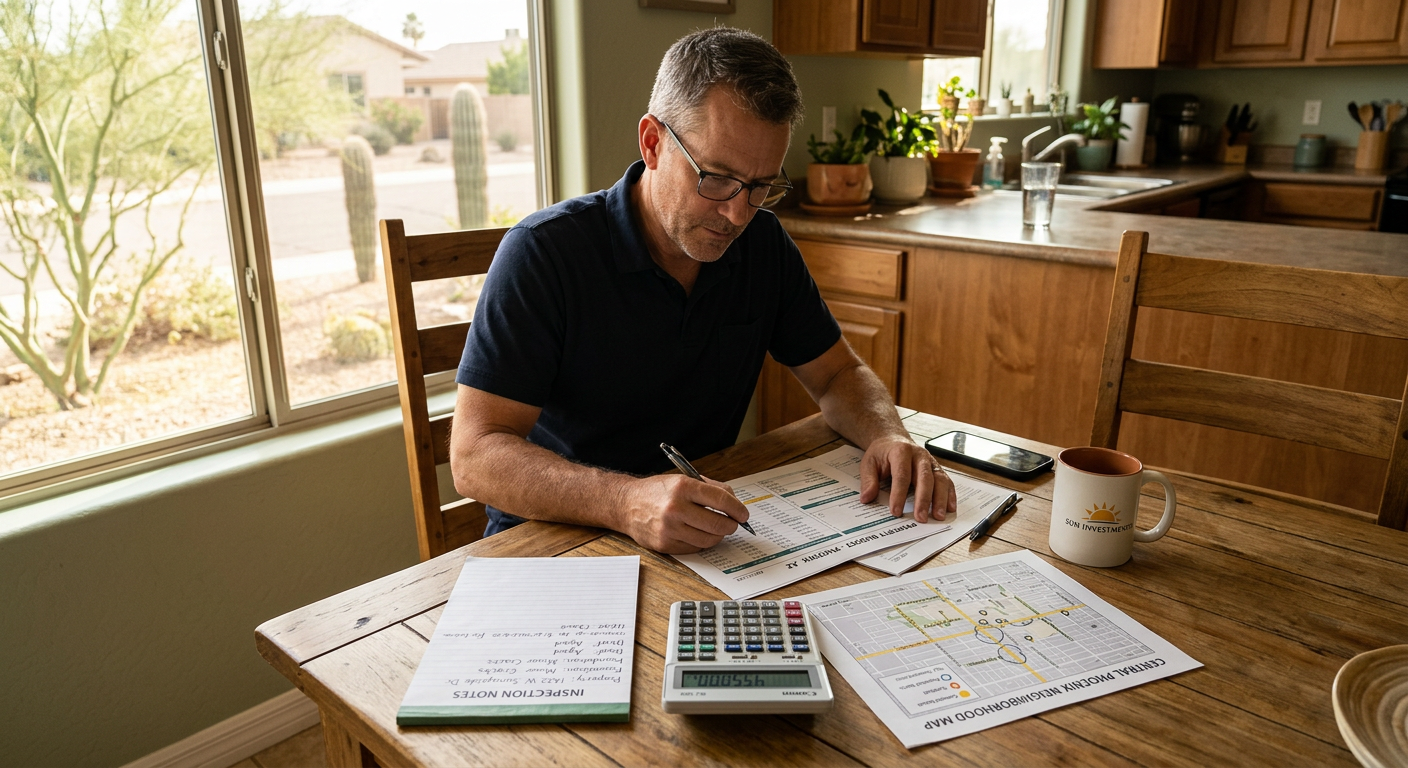
3. Evaluate the Block, Not Just the ZIP Code
A strong Phoenix investment is tied to its immediate surroundings. ZIP codes can help narrow your search, but tenant demand and future resale appeal often change from one pocket of a neighborhood to the next.
Look at the property through two lenses: who would rent it, and who might buy it from you later. A home near a job center, major commute route, neighborhood retail, medical campus, or established school area may attract a deeper renter pool than a comparable home in a less convenient location.
During your area review, pay attention to:
- Competing rentals and their condition
- Street traffic, noise, parking, and lot position
- Nearby construction or commercial development
- Access to employment, retail, parks, and transportation routes
- Signs of owner care, deferred maintenance, or oversupply
- HOA rules that could limit leasing or affect future costs
We recommend comparing active rentals with recently leased homes whenever reliable information is available. An online rent estimate can help start a conversation, but it should not be the final number in your analysis. Property condition, floor plan, yard usability, and local competition can materially change what a tenant is willing to pay.
For broader context before choosing a submarket, review local Phoenix real estate research and market resources. When you are ready to compare opportunities, our Phoenix investment property listings can help you filter by property type and location.
4. Underwrite Income and Expenses Conservatively
The central skill in how to buy an investment property in Phoenix is underwriting the property as a business. A listing may show projected rent or an appealing cap rate, but your decision should rely on income and expenses you have verified and assumptions that can withstand a less-than-perfect year.
Start with expected monthly rent, then subtract every predictable operating cost. Your estimate should account for more than the mortgage payment.
Income to Verify
- Market rent for comparable properties
- Existing lease rent and expiration dates, if occupied
- Utility reimbursements or other recurring income
- Reasonable vacancy and collection allowance
Expenses to Include
- Principal and interest, if financed
- Property taxes and insurance
- HOA dues and special assessments
- Repairs, maintenance, landscaping, and pest control
- Property management and leasing fees
- Utilities the owner pays
- Capital expenses, such as HVAC, roof, plumbing, appliances, or exterior work
A deal that only works with full occupancy, no repairs, and maximum projected rent is too fragile. Build a model that remains workable when rent growth slows, a tenant moves out, or a system needs replacement.
For duplexes through fourplexes, ask for unit-by-unit leases, payment history, utility responsibilities, service contracts, and repair records. Multiple units can diversify income, but they also create more operating details to review. Investors considering larger assets can use our investment sales services for Phoenix income properties to frame acquisition, performance, and eventual disposition together.
5. Make Due Diligence and Compliance Part of the Offer Plan
Due diligence is where a promising deal becomes a defensible investment decision. Use your inspection period to confirm property condition, rental restrictions, insurance needs, ownership documents, and the accuracy of the income assumptions behind the offer.
Your due diligence checklist should include:
- Full home inspection and specialist inspections when warranted
- Roof, HVAC, plumbing, electrical, sewer, and drainage review
- Seller disclosures, permits, and repair history
- HOA financials, rules, rental caps, and pending assessments
- Title review and property-tax history
- Existing leases, deposits, notices, and tenant communications
- Landlord insurance quotes and property-management proposals
Arizona also has practical requirements that investors should understand before a tenant moves in. For residential stays of 30 or more consecutive days, the Arizona Department of Revenue states that residential rental income is no longer subject to city transaction privilege tax from January 1, 2025 forward, though short-term lodging follows different rules. The state also requires residential rental property registration with the county assessor. The registration materials state that owners must update required information within 10 days of a change, and out-of-state owners must designate an Arizona statutory agent. Review the current Arizona Department of Revenue residential rental guidance and the Arizona residential rental property registration form with qualified legal and tax professionals before relying on a specific compliance approach.
A Repeatable Process Beats a Perfect Prediction
Phoenix investors do not need to predict every market movement to make sound decisions. They need a process that compares properties consistently and identifies the details that can change returns after closing.
Use the same scorecard for every property you consider. Rate the location, all-in basis, rental demand, physical condition, financing terms, operating expenses, and exit options. This keeps an attractive kitchen, a low list price, or a rushed timeline from distracting you from the numbers.
For out-of-state buyers, the process matters even more. Build a local team that includes a lender, inspector, insurance professional, property manager, and real estate advisor. A video walkthrough is useful, but it should support, not replace, a disciplined inspection and neighborhood review.
Questions Phoenix Investors Commonly Ask
How much money do I need to buy a Phoenix investment property?
The amount depends on the property type, financing, closing costs, condition, and reserve plan. Rather than targeting only the minimum down payment, plan for cash needed to close plus funds for repairs, vacancy, and early ownership expenses.
Should I buy a single-family rental or a duplex first?
A single-family rental can offer simpler operations and broad resale appeal, while a duplex provides two income streams and may reduce the impact of one vacancy. The better choice depends on your budget, risk tolerance, management capacity, and the condition of the specific property.
Can I buy a Phoenix home as my primary residence and rent it out later?
Yes, but you should understand your lender's occupancy requirements, HOA leasing rules, likely future rental income, and ongoing ownership costs before you buy. A move-in-ready home in a renter-friendly location can provide flexibility if your plans change.
Should I form an LLC before buying a rental property?
An LLC can be useful for organization and liability planning, but it may affect financing, insurance, taxes, and ownership structure. Discuss the decision with an attorney, tax professional, insurance advisor, and lender before selecting an entity.
Do I need a property manager for one rental home?
No, but it can be a sensible choice if you live out of state, have limited availability, or prefer professional leasing and maintenance coordination. Compare management fees with the time, systems, and local vendor relationships you would need to handle the property yourself.
How do I know if projected rent is realistic?
Compare the home with similar active and recently leased rentals, then adjust for condition, bedrooms, parking, yard space, upgrades, utilities, and location. Ask a local property manager for a rental opinion and avoid basing your offer on a single automated estimate.
Quick Takeaway
The best Phoenix investment property is not automatically the lowest-priced listing or the home with the highest projected rent. It is the property that fits a defined goal, carries conservative numbers, meets your inspection standards, and remains appealing to renters and future buyers.
Buying with that discipline gives you more control over the outcome. It also gives you a clearer basis for deciding when to negotiate, when to walk away, and when a property deserves a serious offer.
Discuss Your Phoenix Purchase
We can help you compare residential rentals, small multifamily opportunities, and larger income-producing properties through a local, investment-focused lens.
Thinking about buying or selling real estate in Phoenix?
Call 602-281-6202 or
contact us here
to get local guidance and a clear next step.
About Natan Jacobs
NatanJacobs.com is a Phoenix-based real estate resource from Vestis Group, helping buyers, sellers, and investors
navigate residential, multifamily, and commercial real estate across Arizona. We provide hands-on guidance, market insight, and transaction execution with a focus on clear strategy and real results.
Explore Services & Resources
- For Sale Listings
- Investment Sales
- Leasing
- Tenant Representation
- Research
- Cash Offer
- List My Property
- Contact
Talk With Us
Call 602-281-6202
Email info@vestis-group.com
Contact: https://natanjacobs.com/contact/