
Phoenix Real Estate vs Tucson Real Estate: Which City Fits?
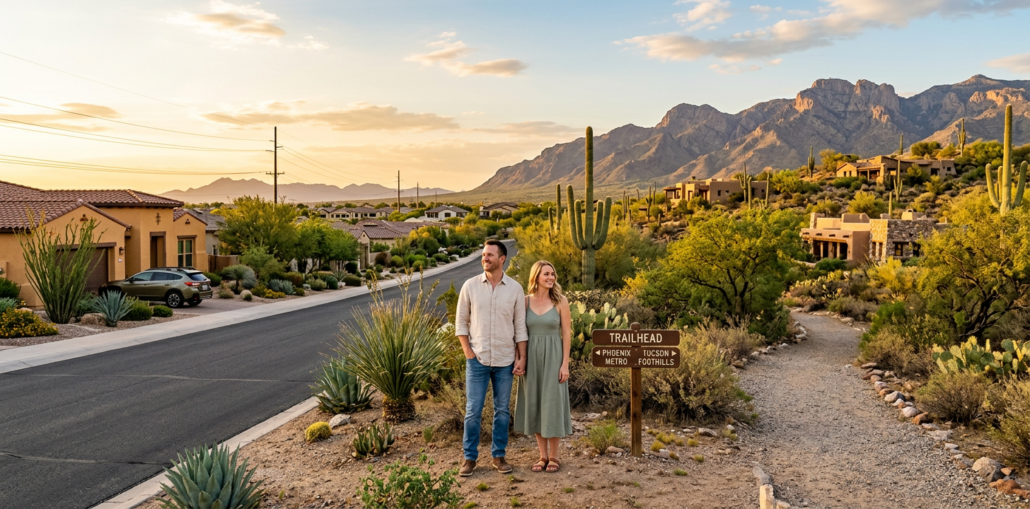
A move within Arizona can look simple on a map, but Phoenix and Tucson create very different home-buying, selling, and investing decisions. Phoenix real estate vs Tucson real estate is not only a price comparison. It is a question of career access, commute patterns, neighborhood character, housing choices, and the kind of daily life you want after closing.
Phoenix offers a much larger metro footprint, a broader range of employment centers, and more suburban housing options. Tucson generally offers a lower entry point, a more compact feel, and strong appeal for buyers who value mountain views, established neighborhoods, and a slower pace. The right choice depends on your budget, timeline, and non-negotiables.
Phoenix Real Estate vs Tucson Real Estate at a Glance
The most visible difference is cost, but price should not be the only deciding factor. Buyers should compare the full ownership picture, while sellers should focus on the demand pool and competition in their specific neighborhood.
| Factor | Phoenix Area | Tucson Area | What It Means for You |
|---|---|---|---|
| Typical asking price | Higher | Lower | Tucson may stretch your budget further |
| Metro scale | Large and spread out | Smaller and more compact | Phoenix offers more location choices |
| Job base | Diverse and expansive | Smaller, anchored by key sectors | Commute and career plans matter |
| Housing styles | New builds, suburbs, condos | Historic homes, desert lots, foothill communities | Prioritize the lifestyle you will use daily |
| Seller competition | Varies widely by submarket | Often neighborhood-specific | Pricing must match local alternatives |
Realtor.com reported median listing prices of $449,000 in Phoenix and $358,500 in Tucson in its current Arizona market data. The same report showed 61 median days on market in Phoenix and 57 in Tucson, a useful reminder that neither city should be treated as one uniform market. Realtor.com Arizona Market Data
Price and Affordability: Tucson Usually Starts Lower
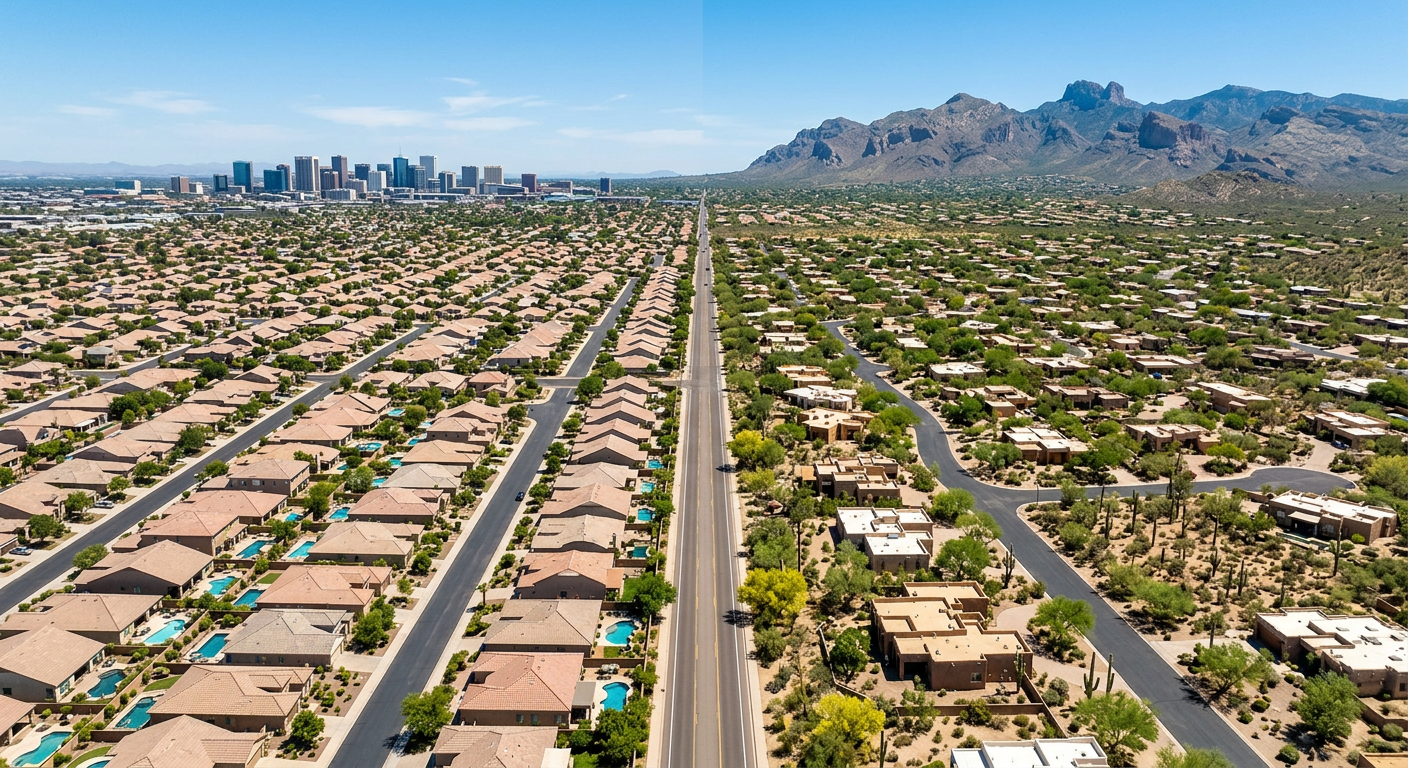
Tucson generally gives buyers a lower price point, while Phoenix offers more variety across a much larger set of suburbs and price ranges. A lower purchase price can improve your monthly payment, but taxes, insurance, HOA fees, maintenance, commute costs, and renovation needs still deserve a line-by-line review.
For a sales-price comparison, the Phoenix REALTORS® October 2026 report showed a $475,000 median single-family sales price in the Phoenix REALTORS® market. The Tucson Association of REALTORS® reported a $360,000 median sale price for August 2026. Those reports cover different periods and market areas, so they are directional rather than a like-for-like appraisal. Still, they illustrate the meaningful entry-price gap buyers often encounter. Phoenix REALTORS® Market Activity Report and Tucson Association of REALTORS® Market Activity Report
What buyers should look beyond the sale price
A home that appears cheaper can become more expensive if it needs substantial updates or adds a lengthy commute. We encourage buyers to compare:
- Monthly housing payment, including HOA and insurance
- Lot size, pool care, roof age, and HVAC condition
- Access to work, schools, family, healthcare, and airport travel
- Property-tax history and potential special assessments
- Resale appeal in the neighborhood, not just the home itself
Tucson affordability is real, but it is not effortless. The University of Arizona's MAP Dashboard reported that, as of May 2026, a median-income Tucson household would need 42.1% of income to afford a median-priced home, compared with 42.8% in Phoenix. Both figures sit above the traditional affordability benchmark, so financing preparation and purchase discipline remain important in either city. MAP Dashboard Housing Affordability
Lifestyle and Location Can Matter More Than Square Footage
Phoenix is often the stronger fit for buyers who want a large metropolitan area with many employment corridors, varied suburban settings, professional sports, major-airport access, and a broad selection of newer communities. Tucson can be the better fit for buyers seeking a more grounded desert setting, distinctive architecture, outdoor access, and a closer connection to the surrounding mountains.
The comparison becomes clearer when you picture an ordinary Tuesday, not just a weekend visit. Where will you drive for work? How often will you use the airport? Do you prefer a newer master-planned community, a walkable historic district, or a home near hiking trails? Those answers narrow the market faster than a generic city ranking.
Phoenix fits buyers who value options and connectivity
Metro Phoenix gives buyers a wide spectrum of settings, from urban condos near central employment hubs to family-oriented neighborhoods in the East Valley and newer construction farther west and southeast. That scale creates choice, but it also means one citywide headline rarely tells you what is happening on a particular block.
For relocation buyers, Phoenix can make sense when career opportunities, proximity to clients, frequent flights, or access to multiple activity centers rank highly. Begin by browsing available options through Phoenix-area homes, condos, and investment listings, then narrow the list around your actual commute and daily routine.
Tucson fits buyers who want character and a tighter metro feel
Tucson's appeal often starts with its landscape and continues with the personality of its neighborhoods. Buyers may find adobe and ranch-style homes, older central neighborhoods, foothill properties, and communities that feel less uniform than many planned suburban areas.
Tucson can be especially compelling for remote workers, retirees, University of Arizona-connected households, and buyers whose lifestyle priorities include hiking, cycling, mountain views, and a less sprawling daily pattern. It can also suit investors who find a property with durable rental appeal near employment, education, or medical anchors, provided the income assumptions and maintenance needs hold up under review.
Sellers Need Different Positioning in Each Market
A strong listing plan is local, not citywide. Phoenix sellers may compete with nearby resale homes, builder incentives, and a large number of alternatives, while Tucson sellers may face buyers who carefully weigh condition, views, location, and neighborhood character.
In Phoenix, sellers should be especially realistic about comparable inventory within a buyer's preferred drive radius. A renovated home near a job corridor or desirable school area may have a different buyer pool from a similar home across town. Presentation, pricing, repairs, and concessions need to respond to the homes buyers can see that same weekend.
In Tucson, a home's condition and setting can carry unusual weight. Mature landscaping, mountain views, efficient cooling, usable outdoor space, and a well-maintained roof may affect buyer interest as much as interior square footage. Before listing, use a market-specific pricing conversation rather than relying on a neighbor's sale from a different micro-area. Sellers can begin with a property listing consultation or consider a cash-offer option for an Arizona property when speed and certainty are priorities.
How Investors Should Compare Phoenix and Tucson
Phoenix offers greater scale and liquidity, while Tucson may offer a more approachable basis for certain residential investors. Neither market is automatically better. The better market is the one where the property, tenant demand, financing structure, and exit plan align.
Phoenix investors can find a deeper pool of single-family rentals, small multifamily properties, and commercial opportunities across numerous submarkets. Competition can be stronger, and purchase prices may require more precise underwriting. Tucson may present a lower acquisition cost, but investors should avoid assuming lower cost automatically means stronger cash flow.
Underwrite the property, not the city name
For either market, we recommend testing:
- Market rent against actual competing listings
- Vacancy and turnover assumptions
- Insurance, utilities, repairs, and capital reserves
- Neighborhood-level employment and renter demand
- Restrictions involving HOA rules, zoning, or short-term rentals
- Your expected holding period and disposition plan
For larger properties or commercial decisions, investment sales support can help owners and buyers frame the opportunity around actual income, location, and marketability. Our Arizona real estate research resources are also useful for tracking broader multifamily and market conditions.
A Simple Decision Framework for Arizona Buyers
The right city is usually the one that creates the fewest compromises on your most important three priorities. Start by deciding what must be true about your budget, work access, and lifestyle, then test each city against those conditions.
Choose Phoenix first if you need broad job access, value a major metro's variety, want newer suburban inventory, or expect frequent airport and client travel. Choose Tucson first if a lower purchase price, a more relaxed pace, neighborhood character, and outdoor-oriented living rank ahead of metro scale.
If your choice is still close, take two focused trips. Tour homes at your target price in both cities, drive your likely commute during a normal weekday, and spend time in the neighborhoods after dark. A well-planned visit usually tells you more than weeks of comparing online photos.
Quick Takeaway
Phoenix and Tucson both offer legitimate opportunities, but they serve different priorities. Phoenix tends to deliver scale, employment access, and more housing variety. Tucson often provides a lower entry price, strong character, and a more compact desert lifestyle.
The best move is not to chase the lowest headline price or the largest city. It is to choose the location and property that work for your payment, daily life, and long-term plans.
Common Questions About Phoenix and Tucson Homes
Is Phoenix more expensive than Tucson for home buyers?
Generally, yes. Current city-level listing data shows Phoenix with a higher median listing price than Tucson, although the gap changes by neighborhood, property type, and condition. Compare homes using the same size, age, location quality, and renovation level before making a decision.
Does Tucson have a better climate than Phoenix?
Tucson's higher elevation can make it feel different from Phoenix, but climate preference is personal. Spend time in both cities during the season you find most challenging, especially if you are relocating from another state.
Is Phoenix or Tucson better for a first-time buyer?
Tucson may offer a lower starting price, which can help some first-time buyers. Phoenix may offer more neighborhood and property-type choices, so a buyer with a firm commute or lifestyle requirement could still find the better fit there.
Which city is better for rental-property investing?
Phoenix often provides more scale and liquidity, while Tucson may offer a lower acquisition basis. The answer depends on the specific property's rent potential, expenses, condition, financing, and resale plan.
Do sellers need to make repairs before listing in either city?
Not every repair is necessary, but visible deferred maintenance can reduce offers or lead to longer market time. We recommend identifying safety issues, major systems concerns, and cosmetic items that buyers will use to compare your home against nearby alternatives.
Make Your Arizona Move With a Clear Plan
The Phoenix versus Tucson decision is easier when we translate broad market information into a shortlist of neighborhoods and properties that match your real budget and priorities. We help buyers, sellers, and investors assess the tradeoffs before they commit to a market, a home, or a listing strategy.
Thinking about buying or selling real estate in Phoenix?
Call 602-281-6202 or
contact us here
to get local guidance and a clear next step.
About Natan Jacobs
NatanJacobs.com is a Phoenix-based real estate resource from Vestis Group, helping buyers, sellers, and investors
navigate residential, multifamily, and commercial real estate across Arizona. We provide hands-on guidance, market insight, and transaction execution with a focus on clear strategy and real results.
Explore Services & Resources
- For Sale Listings
- Investment Sales
- Leasing
- Tenant Representation
- Research
- Cash Offer
- List My Property
- Contact
Talk With Us
Call 602-281-6202
Email info@vestis-group.com
Contact: https://natanjacobs.com/contact/
