What Is My Phoenix Home Worth? A Seller’s Value Guide for 2026
A home-value question can feel simple until you compare an online estimate, a neighbor’s recent sale, and your tax notice, then find three very different numbers. The useful number is not a generic estimate. It is the price a qualified buyer is likely to support for your specific home, in its current condition, under current Phoenix market conditions.
When we ask what is my Phoenix home worth, we look beyond a single price point. We evaluate recent closed sales, active competition, your home’s features and condition, likely buyer demand, and the strategy that can protect your net proceeds. That creates a realistic pricing range, not a flattering guess that later leads to price cuts.
What Is My Phoenix Home Worth Based On?
A credible home valuation starts with comparable sales, often called comps. These are homes that have actually closed, ideally nearby and recent, with similar square footage, age, lot utility, property type, condition, and amenities.
Online valuation tools are helpful as an early reference, but they cannot walk through your home. They may not recognize a remodeled kitchen, a newer HVAC system, an exceptional view lot, an outdated roof, or the difference between a quiet interior street and a busy arterial road.
Here are the core inputs we use when estimating market value:
- Recent closed sales: The strongest evidence of what buyers have paid.
- Active and pending listings: These show what buyers can choose from and where the market may be headed.
- Condition and updates: Kitchens, baths, flooring, roof age, HVAC, windows, pool condition, and deferred maintenance can change the buyer response substantially.
- Location details: ZIP code, school boundaries, commute access, lot placement, nearby retail, mountain views, and neighborhood character all matter.
- Sale terms: A high recorded sale price may include seller concessions, repairs, or other terms that affect the real comparison.
The Maricopa County Assessor also considers items such as prior sales, zoning, topography, square footage, lot size, and property features in its mass-appraisal process. Still, the county explains that its valuation is created through computer analysis and may not capture every distinction that matters to an active buyer. Read more in the Maricopa County Assessor property-values guidance.
Why Phoenix Home Values Can Change Street by Street
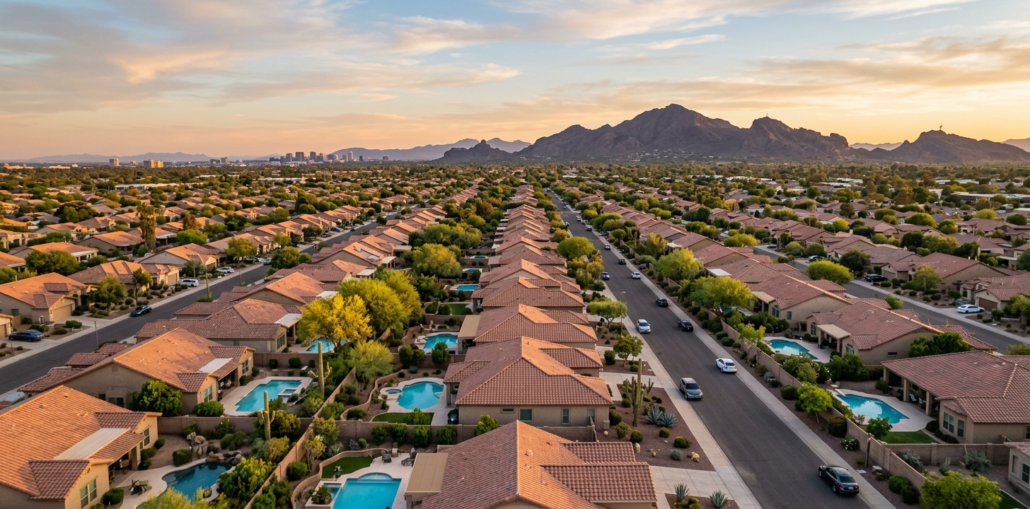
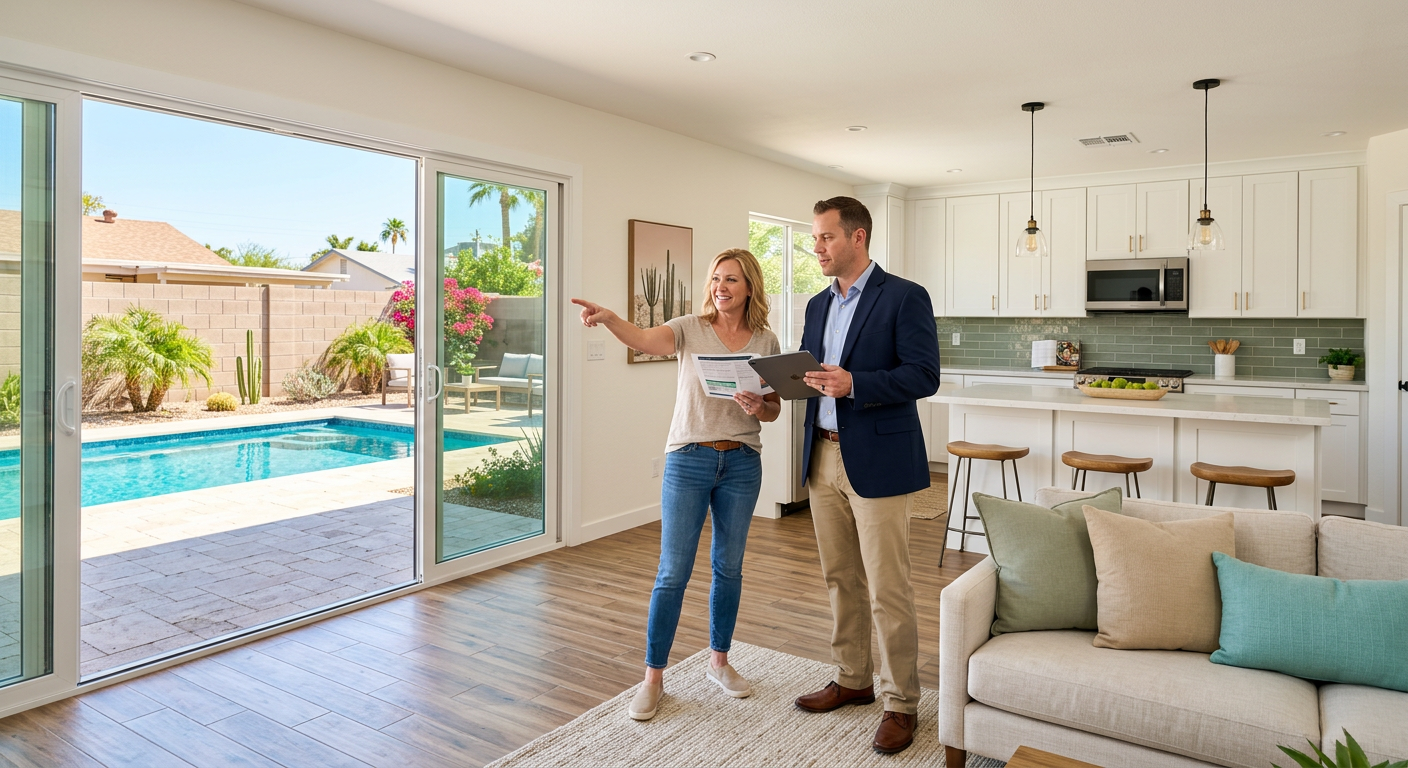
Phoenix is not one uniform housing market. A similarly sized home can command very different pricing in Arcadia, North Central, Ahwatukee, Desert Ridge, Laveen, Sunnyslope, or a fast-growing outer suburb. Even within the same neighborhood, a pool, lot orientation, garage capacity, updated systems, or view corridor can influence demand.
That is why we avoid applying a citywide median price directly to an individual property. Median figures are useful for context, but they blend luxury homes, entry-level homes, condos, and properties with very different locations and conditions.
The latest published ARMLS July 2026 STAT Report, which reflects June activity, reported that sales volume was about 8% higher than a year earlier while active inventory was down about 5%. It also noted that asking prices had declined year over year for 26 consecutive months, although the pace of decline had moderated. For a seller, that means buyers are still active, but they are paying close attention to value and competing alternatives.
A practical valuation should answer these questions:
- Which recent sales are truly comparable to our home?
- Which active listings will buyers tour instead?
- Does our condition justify a premium, support market pricing, or require an adjustment?
- What buyer pool is most likely to respond, owner-occupants, relocation buyers, move-up buyers, or investors?
- What list-price range gives us the best chance to attract attention without leaving value on the table?
For a deeper look at the mechanics, we recommend our guide on how much you can sell a Phoenix house for.
A Simple Way To Build A Realistic Pricing Range
Most homeowners do not need an appraisal before deciding whether to sell, but they do need disciplined local analysis. We generally build a range rather than presenting one overly precise number.
Start With Closed Sales
Prioritize comparable closed sales from the most recent 30 to 90 days when enough data exists. In slower-moving neighborhoods or unique property types, the appropriate window may be longer. The goal is to understand what buyers completed, not merely what sellers hoped to receive.
Adjust for Meaningful Differences
No two homes are identical. We account for factors such as a newer roof, updated kitchen, extra bedroom, functional office, guest casita, pool, larger lot, view, garage configuration, or major repair needs.
Be careful with improvement costs. Spending $60,000 on a renovation does not automatically raise value by $60,000. Buyers usually reward updates that improve livability, reduce perceived maintenance risk, or help a home stand out in photos and showings.
Compare the Home Against Current Competition
Closed sales provide the foundation, but active listings shape the buyer’s decision. If several polished, updated homes are available at a similar price, an older or less prepared property may need a sharper price, concessions, or a more selective prep plan.
This is especially important in a balanced market. Our recent discussion of Phoenix home price drops and buyer negotiating power explains why an ambitious opening price can cost more than it gains.
What Can Increase or Reduce Your Sale Price?
The biggest value drivers are usually visible, practical, and easy for buyers to understand. We recommend documenting improvements with receipts, permits when applicable, warranties, and service records, especially for high-ticket systems.
Features That Often Support Buyer Demand
- Updated kitchens and bathrooms with cohesive finishes
- Reliable HVAC, roof, plumbing, and electrical systems
- Functional floor plans and flexible living space
- Well-maintained pools and outdoor entertaining areas
- Strong curb appeal, clean desert landscaping, and shaded outdoor spaces
- Energy-efficient features that support lower operating costs
- Move-in-ready presentation and professional photography
Issues That Often Cause Discounts
- Deferred maintenance or unclear repair history
- Dated interiors competing against renovated homes
- Roof, HVAC, pool, or plumbing concerns
- Heavy clutter, dark rooms, or poor listing photos
- Unresolved HOA, solar lease, or permit questions
- A price that is not supported by nearby alternatives
Here is the thing, not every seller needs a renovation plan. Sometimes light repairs, paint, cleaning, landscaping, and staging produce a stronger result than a large project with an uncertain payoff. For a broader prep strategy, see our practical guide to selling a house in Phoenix.
Online Estimate, Assessor Value, CMA, and Appraisal
These tools can all be useful, but they serve different purposes.
| Valuation Tool | Best Use | Main Limitation |
|---|---|---|
| Online estimate | Early ballpark | Cannot see condition |
| Assessor value | Tax context | Uses mass appraisal |
| Comparative market analysis | Listing strategy | Depends on local judgment |
| Appraisal | Lender support | Follows contract process |
Your assessor value is not necessarily the number you should list for. Arizona property taxes are generally based on Limited Property Value, which may move differently than market value. The Maricopa County Assessor explanation of LPV is a helpful resource when you are comparing a tax notice with a potential sale price.
A comparative market analysis is the most useful planning tool for most sellers. It helps us set expectations before listing, identify the strongest buyer-facing features, and decide whether preparation or pricing needs attention.
How To Use Your Home Value Before You Sell
A home valuation should lead to a decision, not sit in a spreadsheet. Once we establish a defensible range, we can compare your likely sale price with estimated closing costs, mortgage payoff, repairs, moving expenses, and the cost of your next home.
For move-up buyers, this also helps determine whether selling first, buying first, or coordinating both transactions is realistic. For investors, it can clarify whether a traditional listing, a tenant-occupied sale, or a simpler off-market option makes the most sense.
If certainty and speed matter more than broad market exposure, compare a conventional listing with the option to request a Phoenix cash offer. A cash path can reduce showings and financing risk, while a fully marketed listing may produce a higher price. The right fit depends on your timeline, property condition, and desired net proceeds.
Common Questions About Phoenix Home Values
How accurate are online home-value estimates?
They can be a useful first reference, but accuracy varies by neighborhood and property type. They are least reliable when a home has unusual features, major updates, deferred maintenance, limited nearby sales, or a location advantage that algorithms cannot fully assess.
How often should we update our home valuation?
If selling is a possibility within the next six months, update the analysis every 30 to 60 days. New listings, price changes, pending contracts, and closed sales can change your competitive position quickly.
Will remodeling always increase our home value?
No. The best improvements support buyer confidence and match expectations in the neighborhood. We can help you distinguish between repairs that protect value and upgrades that may not produce a meaningful return.
Does a pool add value to a Phoenix home?
Often, but not always by the amount it cost to install. In many Phoenix neighborhoods, a well-maintained pool is expected or attractive. Condition, safety features, lot size, and buyer preferences still matter.
Should we price above the valuation range to leave room for negotiation?
Usually, that approach creates risk. Buyers compare homes quickly, and a price that misses the market can reduce showing traffic and lead to later reductions. A strategic price should reflect your goals and the competition buyers see on day one.
Make Your Next Move With a Clear Number
Your home is worth what the market will support, but the outcome is also shaped by preparation, positioning, and negotiation. A focused analysis of comparable sales and current competition gives you a much stronger basis for deciding whether to list, what work to complete, and how to plan your next purchase.
If you are weighing a sale, reviewing options for listing your Phoenix property is a practical next step. We can help you separate a broad estimate from a workable strategy that fits your location, home, and timeline.
Thinking about buying or selling real estate in Phoenix?
Call 602-281-6202 or
contact us here
to get local guidance and a clear next step.
About Natan Jacobs
NatanJacobs.com is a Phoenix-based real estate resource from Vestis Group, helping buyers, sellers, and investors
navigate residential, multifamily, and commercial real estate across Arizona. We provide hands-on guidance, market insight, and transaction execution with a focus on clear strategy and real results.
Explore Services & Resources
- For Sale Listings
- Investment Sales
- Leasing
- Tenant Representation
- Research
- Cash Offer
- List My Property
- Contact
Talk With Us
Call 602-281-6202
Email info@vestis-group.com
Contact: https://natanjacobs.com/contact/